Showing posts with label Massachusetts abolitionist. Show all posts

Saturday, August 26, 2017

A Rare Cane with Paper Trail From Abraham Lincoln to Charles Sumner to Mrs Hastings and Major Ben: P Poore


A Cane presented to President Lincoln was one of the relics owned by Major Ben: Perley Poore at his home, Indian Hill Farm in West Newbury, Massachusetts. Currently In A Private Collection. 


A Post card of Indian Hill Farm Estate in West Newbury, Massachusetts occupied by Ben: Perley Poore.


Portrait of President Abraham Lincoln. The background scene depicts ships of war. In a New Hampshire Private Collection.

The cane is most likely designed by John C Nobles of Rushford, New York, and presented to President Abraham Lincoln in 1864. There are two copies of correspondences answering queries on the cane. One from the United States Office of Commerce Patent Office and the other from United States Office of Interior Park Service in 1965 (provided by the current owner). The letters suggest the cane was a design by Nobles, but no direct match has been made to Lincoln. However, there are letters, memorial sketches, and newspaper clippings that reveal a direct association.  


John C Nobles Patents are listed in the Smithsonian Archives, Scientific American, House Documents, Otherwise Published as Executive Documents: 13th Congress, 2d Session-49th Congress, 1st Session, Volume 10, Part 1, Commissioner of Patents Annual Report. In August of 1862, Nobles is listed with a Thomas Birch, under the firm of Birch & Nobles in Annual Report of the Commissioner of Patents, Part 1, Volume 1

I was able to establish a paper trial from Lincoln to Major Poore. However, I am not finding a date or place on when Lincoln actually was presented with the cane.

First, the cane was gifted to Senator Charles Sumner (1811-1874) via Mary Todd Lincoln (1818-1882) wife of Abraham Lincoln

In a letter dated May 9 1865, From Mrs. Lincoln to Sumner:


From Memoir and Letters of Charles Sumner, Volume 4 Edward Lillie Pierce 
   
The cane is not described in this letter, but after Sumner's death in 1874 the cane is detailed when it went to Mrs Hastings, sister of Sumner. 

This would be his sister Julia Sumner (1827-1876) who married to Dr. John Hastings (1814-1891) in 1854 and moved to San Fransisco, California. She was named in Sumner's will, along with her daughters. (Charles Edwards Lester, Life and Public Services of Charles Sumner, pg 684-685)


According to "The Memoir and Letters of Charles Sumner, Volume 1," Julia dealt with poor health, but her last visit to the Atlantic States was in 1862.  She visited Washington at that time. Her brother Charles accompanied her to New York, and parted with her at the steamer, as she sailed on her return. "I shall never forget," Julia afterwards wrote, "his tender care at that time. My last sight of him was standing on the wharf as the steamer moved off." (Edward Lillie Pierce, pg. 34)

In 1874, Julia Sumner Hastings presented the cane to Major Ben: P Poore. 


The cane presented to President Lincoln, who gifted it to Senator Sumner. Sumner left the cane to his sister, who gifted it to Poore. Saturday May 12 1883 page 3 Evening Star Washington District of Columbia Springfield Republican December 24 1874 

Charles Sumner, son of Charles Pinckney Sumner and Relief Jacobs was described as "the most elegantly tailored man in House or Senate," who "resembled Lord Chatham more closely than any statesman of the nineteenth century."  He had a "handsomely modeled head, wavy locks of hair, and sideburns." (Gingberg)

Ben: Perley Poore in his youth. Poore had beautiful features and a was a prolific writer. There is a similarity to Lord Byron. Portrait from Indian Hill now in private collection


Autograph sentiment signed: "With the regards of/ Ben: Perley Poore/ Indian Hill Farm, near/ Newburyport, Sept. 26, 1878"  Newburyport, Massachusetts. September 26, 1878.


In Major Poore's obituary the cane is mentioned, from The Burlington Free Press and Times   


Boston Post June 15 1887 Will of Ben: P Poore's Will and Locket containing Sumner's hair to Charles Wesley Slack, abolitionist, temperance advocate, editor and proprietor of the newspaper The Boston Commonwealth.


Obit for Charles Sumner Saturday, December 15, 1894 Sacramento Daily Union (Sacramento, California) Page: 8

A fun tidbit from 1902: The locals resurrected the famous "Savages," a battalion formed by Major Poore which became the Nineteenth Massachusetts Regiment. Organization of the "Savages" from The Boston Post 1920 mention Ben: P P Moseley, Paul N. Hale, Stephen Noyes, Henry D. Lay, Shubel Rogers, Carleton Moody, Richard Newhall, Joseph Floyd, E. Moody Boyton, and Carrie H Marsh.

  • Abraham Lincoln: The Prairie Years and the War Years Carl Sandburg Sterling Publishing Company, 2007
  • Nason, Elias. The Life and Times of Charles Sumner: His Boyhood, Education, and Public Career
Saturday, November 23, 2013

Women Organized Against Slavery, 1688-1870

A Share from author & historian Larry Ceplair and a chapter his unpublished manuscript 


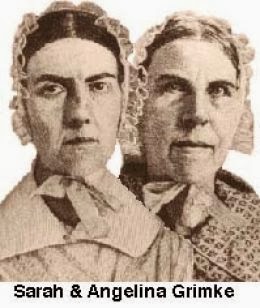
Following the women’s national antislavery convention, the Grimké sisters (Angelina & Sarah) began their relatively short lecturing career, in Massachusetts. Between June and November 1837, they spoke on the average of four times a week, in sixty-seven towns, to some 40,000 listeners.1 They inspired thousands of women to sign petitions and hundreds to join or organize antislavery societies. John Quincy Adams credited them “for a vast proportion of all petitions coming from their sex in New England, on the subject of Texian annexation,”2 and at least twenty-five new female antislavery societies formed in Massachusetts during their sojourn there (May 1837-April 1838).


Lidian Jackson Emerson (September 20, 1802- November 13, 1892) Daughter of Charles Jackson and Lucy Cotton Jackson. Second wife of of American essayist, lecturer, poet and leader of the nineteenth century Transcendentalism movement, Ralph Waldo Emerson.
In Concord, following the Grimkés second appearance there, in early September, Lidian Jackson Emerson (1802-92), the second wife of Ralph Waldo Emerson, wrote to her niece:
They have passed [this] week in Concord and been well received. They dined & took tea with [me] one day and it was a pleasure to entertain such angel strangers – pure & benevolent spirits are they. I think that I shall not turn my attention from the abolition cause till I have found whether there is not something for me personally to do and bear to forward it. I hope you will read any books or papers on the subject that you may meet with – if you can do nothing more for the oppressed after you have considered their case and become interested in it you can pray for them.3
She became one of the most active members of the newly formed Concord Female Anti-Slavery Society, and, according to her daughter: “She read the papers faithfully and their pro-slavery tone made her hate her country. She learned all the horrors of slavery and dwelt upon them, so that it was as if she continually witnessed the whippings and the selling away of little children from their mothers.”4 She also participated in their petition campaigns.


Garrison and fellow abolitionists George Thompson and Wendell Phillips, seated at table, daguerreotype, ca. 1850–1851

In Bolton, however, matters proceeded more slowly. Octavia Gardner described events there:
Until within two years, the subject of Abolitionism was not agitated, or perhaps named, at all, about us, or if named, but with sneers, by those who scarce knew its meaning. The first lecture was given here by Misses Grimké . . . . I was surprised at the general attendance of the people on the occasion of their Lecture for I knew there was prejudice among them in relation to the subject. It gave satisfaction & about twelve came forward & acknowledged themselves interested, sincerely, in the Anti Slavery Cause. I thought this a good beginning & a foundation & opening for a regular Society, & proposed it to them at the time, but they thought it inexpedient, & declined, urging as a reason, that the subject had not been generally discussed & public opinion was in opposition, & a society could not be supported satisfactorily to them. Misses Grimké lectured in many of the adjacent towns & those interested in them followed them & seemed much gratified. . . . Last autumn we had another lecture & a small society was formed, consisting of about twenty, men & women, & I hope that the result will prove it expedient as successful, but my fears are as numerous as my hopes.
Unfortunately, Gardner continued, “I am not free myself to act. My parents both of them were ever opposed to the subject of Anti Slavery.” She felt herself torn between her duty toward her parents and her duty toward the cause: “‘I’m in a strait betwixt the two.’”5

An increasing number of men joined the throngs of people eager to hear the Grimké sisters speak, and, inevitably, the question of the propriety of mixed audiences listening to female lecturers arose. It should be noted, however, that the critical case against women speaking in public, to mixed audiences was closely intertwined with antipathy toward Garrisonian abolitionism.


Catharine Esther Beecher (September 6, 1800 – May 12, 1878) Daughter of prominent New England minister the Rev. Lyman Beecher and Roxanna (Foote) Beecher. The first public attack came from Catharine E. Beecher (1800-78), the eldest daughter of Lyman Beecher (1775-1863), a long-standing foe of Garrison. (See Chapter Seven.) She noted, in a family circular letter: “I am just finishing a little vol[ume] entitled ‘An Essay on Slavery & Abolitionism with reference to the duty of American Females’ – done at father’s request & he is rejoicing over it greatly as it contains all he has been wanting to have said & could not get a chance to do it himself.”6

1Gerda Lerner, The Grimké Sisters from South Carolina: Rebels Against Slavery (Boston: Houghton Mifflin, 1967), 227.
2John Quincy Adams, Speech: John Quincy Adams of Massachusetts, Upon the Right of People, Men and Women, to Petition . . . (Washington, D. C.: Gale and Seaton, 1838; New York: Arno and New York Times, 1969), 78.
3Lidian Jackson Emerson to Sophia Brown, September 9, 1837, in Delores Bird Carpenter, ed., The Selected Letters of Lidian Jackson Emerson (Columbia, MO: University of Missouri Press, 1987), 60-61. See also, F. B. Sanborn, Recollections of Seventy Years (Boston: Richard G. Badger, 1909), 2:378-79, 446.
4Ellen Tucker Emerson, The Life of Lidian Jackson Emerson, Delores Bird Carpenter, ed. (Boston: Twayne, 1980), 83-84.
5Octavia Gardner to Ann Phillips, May 7, 1839, in Irving H. Bartlett, Wendell and Ann Phillips: The Community of Reform, 1840-1880 (New York: Norton, 1979), 198-200.
 6The letter is not dated, but appears to have been written in April 1837. It is in the Acquisitions Department, Stowe-Day Library, Hartford, CT.

Popular Post