Showing posts with label Newbury. Show all posts

Sunday, February 2, 2014

Edward Henry Little and Spencer-Pierce-Little Farm

Edward Henry Little son of Henry Little and Phebe ? was born September 21, 1819 in Newbury Ma, and died February 27, 1877 in Newbury Ma. He married Catherine Adams Little (1828-1923) on March 21, 1850 in Newbury Ma. daughter of Ebenizer Little and Eliza Adams. Edward was GR Gr Gr Grandmother Sarah Jackson Little cousin


Edward was a tenant on the Spencer-Pierce-Little Farm for approximately ten years (Essex County Registry of Deeds Book). He had a dairy business and farmed a variety of vegetables sold in community.
Children:
Henry Bailey Little
Daniel Noyes Little
Edward Francis Little

According to Yamin Methany Edward was most certainty an interested owner and several of his accounts and journals show how meticulous and engaged he was in the everyday affairs. in 1991 hundreds of copies of the Massachusetts Ploughman were discovered in the attic of the house. Edward also had a subscription to the agricultural newspapers until his death in 1877. He was a member of the Essex Agricultural society and was a trustee before he owned the farm.

1812 plan below show that the property served multiple agricultural purposes, providing tillage, pasture. salt marsh, and wood lots.


After his death his sons Daniel and Edward and started a business of importing draft horses from the Midwest.
From Transactions By Essex Mass Agricultural Society
Edward H. Little, Newbury, draft horse, 4th premium, 5 00

Edward F. Little, Newbury; best teamster of horses, Loring
premium, $10 00 Picture: View from the west of the Spencer-Pierce-Little Farm1855 Photograph by Wilfred A. French


Thursday, July 17, 1947  Paper: Boston Herald (Boston, MA)


A Day to Remember Old Newbury
Descendants of George Little of Newbury
Visit The Spencer-Pierce Little Farm @ Historic New England Below is their link and some info
Little Family Papers

Wednesday, October 9, 2013

Naughty & Notable Citizens of the Puritan Republic

And Be Sure to Join New Group on Face Book: Scandalous Ancestors


When our Puritan ancestors set up shop in New England, the business at hand was keeping the flock pious, proper, and productive. Public humiliation was one popular form of keeping order, as well denting the purse -- essentially, the vices and folly of the citizens financed and sponsored the pretentious, dogmatic ideals of a handful of tyrants. The courts had carte blanche to dole out punishments and benefited immensely from any “wanton” deviant behavior. 


            As the colonies grew, so did the records of naughtiness. Punishment came in many forms, and all respectable settlements had the latest mutilation machines and contraptions on hand. For instance, laws required each town to acquire a set of stocks. Both Concord and Newbury were fined 5 pounds (March 1638) for non-compliance and soon got up to code. There were also many other forms of executing justice -- badges, brandings, and bridles, to name a few. So sit back and enjoy these ancestral tales of crime and punishment, and be grateful you live in present-day Massachusetts rather than the "ice age -- sterile, forbidding, unproductive, its history dotted only with boulders and stunted growth" (Howe, The Puritan Republic).


 Some “good” wives of Mass Bay were more like mischievous mice than obedient crones -- some sought to play while their cat fellows were away. A case from 1672-1673, Sarah Roe of Ipswich was forced to wear a sign on Sabbath day: “For My Baudish Carriage.” Roe had an affair with Joseph Leigh while her husband was away at sea, and both were charged with “unlawful familiarity.” Leigh suffered a day of severe lashing, plus a 5-pound fine. Roe, in addition to her debasing debut at the meeting house, spent a month behind bars. George Palmer, after committing folly with Margary Ruggs “through her allurement,” confessed voluntarily, so he only endured a few hours in the stocks; however, the sultry temptress Ruggs was severely whipped in public for “enticing and alluring.”
            Another interesting case of fleshy intrigue in Newbury (1633) really made windows steam and had every Chatty Cathy buzzing. The incident occurred between a traveling doctor named Henry Greenland and Mary Rolfe, wife of John Rolfe, a shipwright. While Rolfe was away on a voyage, Greenland lodged at a tavern owned by John Emery (Mary's stepfather), conveniently located next door to the lonely lass. Apparently, Greenland was quite a looker, and after just one night of window tapping, he made his way into her hot bed. Her companion, Betty, hired by Mary’s husband during his absence, claims Mary fainted when Greenland attempted his advances. When the news hit the townie grandes dames, Greenland had nowhere to hide and was hauled into court, convicted, and fined 30 pounds for “attempting adultery.” Although the outcome left Mary's reputation unscathed, she no doubt had some fetching memories of the event. 

Our ancestors often referred to the burden of the human flesh as “that pang of pleasure.” Like the mice wives, hitched men folk (and some single studs, too) also liked to sport around town on occasion. John Davies of Ipswich was whipped for “gross offenses and attempting lewdness with diverse women” and forced to wear a “U” for "Unclean" upon his chest for six months. Suffolk County records report a sentence requiring Thomas Jay “to stand upon a block or stool in the Boston marketplace with a paper upon his breast written in large characters: For Lascivious Carriages towards Young Women” (1675). Likewise, John Stanwood was sentenced to prison for committing fornication with Christian Marshman, who was with child by him. He tried to deny it, but there was too much evidence stacked up against him, and his lusty love bite cost him 50 pounds in damages. For her part in the scandal, Marshman received a severe public lashing. 

Drunkenness was next on the list of naughty rituals. Called “habitual tipplers,” these folks were like gangsters put in the proverbial “black book.” In 1639, the General Court passed a law that made excessive drinking a penal offense. Many entries in the record books read like this: "James Brown is censured for drunkeness to bee set two hours in the bilboes upon market day at Boston publiquely." The magistrates ordered all ordinaries and public places that served strong waters to make note of frequent tipplers, and serving them meant incurring a fine. Additionally, officials placed strict surveillance upon innkeepers and tavern owners and required them to procure licenses.
Laws required every innkeeper to be "always provided of strong, wholesome Beer, of four bushels of Mault (at the least) to a hogshead, which he shall not sell at above twopence the Ale quart." Innkeepers were also expressly forbidden to sell sack or strong water, to allow any drunken person on their premises, or to suffer any person "to drink excessively, viz., above halfe a pint of wine for one person, at a time, or to continue Tipling above the space of halfe an hour, or at unseasonable times, or after nine of the Clock at night" (Mass. Records Vol. 10).


Among the abundant court records involving drunkenness, here are a few regarding tanked-up naughties: John Shotswell was fined eleven shillings in September of 1633 "for distemping himself with drink at Agawam." Similarly, Robert Coles was fined for his excesses and "enjoined to stand with a white sheet of paper on his back wherein A Drunkard shall be written in great letters, as long as the Court thinks meet.'' John Lee was sentenced to be whipped and fined for calling Mr. Ludlowe "a false-hearted knave and hard-hearted knave, heavy friend etc" while on one of his benders. Daniell Ela, presented in Salisbury Court in 1672 for being drunk in Newbury at Robert Holmes' house, as well as for cursing and swearing, was convicted and fined. He was then ordered to remain in prison until the judgment was satisfied.
The 1652 court records list this judgment against Dr. William Snelling: “presentment for cursing is fined ten shillings and the fees of court.” It seems the good doc was not one to wait for the 5 o’clock happy hour, and instead he happily sipped his way through all his appointments. He reportedly recited this fun foot therapy after chasing a few beers - a stunt which landed him in front of the magistrates:
                                                "I'll pledge my friends,
                                                And for my foes,
                                                A plague for their heels,
                                                And a poxe for their toes."
In his History of Newbury, Currier notes Snelling was “denouncing his enemies within temperate zeal." His friends William Thomas and Thomas Milward signed and filed the following statement with the clerk of the court: "This is to certify whom it may concern that we, the subscribers, being called upon to testify against Mr. William Snelling for words by him uttered, affirm that being in way of merry discourse, a health being drunk to all friends.” He answered with the above lines, but later defended himself by asserting he meant it only for the West County folk. Affixed to this statement was the following acknowledgment: 
March 12, 1651-2, all which I acknowledge and I am sorry I did not express my intent, or that I was so weak as to use so foolish a proverb.
Guilielmvs Snelling. 

Notwithstanding this humble apology, it appears from the court records that on the thirtieth day of March 1652 "Mr. William Snelling upon his presentment for cursing is fined 10 pounds and fees of court."


            Along with sins of the flesh, drunkenness, and cursing, the Sabbath day became another hot topic for Puritan punishment. There are numerous court documents from brawling to “sundry abuses and misdemeanors, committed by sundry persons… to drink, sport and otherwise to misspend that precious time, which things tend much to the dishonor of God.” Thomas Bragg and Edward Cogswell had a heated quarrel "on the Lord's day in time of exercise" and both were fined 10 pounds. Humphrey Griffin was fined 10 pounds for unloading barley on the Sabbath before sunset, as well as for picking peas. Edmond Bridges was fined five shillings for writing a note to John Todd in Rowley meeting house during lecture time.
            The years 1674 - 1676 proved to be busy years for church disorderliness. The General Court took the matter in hand and transferred powers to both the officers of the congregation and the Selectmen of Towns to appoint a patrolman "to reform all such disordered persons, in the congregations or elsewhere about the meeting houses." These reforms certainly did not stop Stephen Cross, who “struck out at worshipper” and was fined. Elizabeth Hunt and Abigail Burnam disrupted public service and were arraigned before the Court, and their fathers admonished. Sam Hunt Jr. was admonished and fined for “his light behaviour.” John Averill was hauled into Court for striking Thomas Twigs in the meeting house "in the time of public ordinances on the Sabbath."
            Family feuds were yet another naughty transgression that would certainly have earned colonists a spot on Jerry Springer. John Tilliston/Tilston? of Newbury tied his wife to the bedpost with a plow chain to keep her at home. He was fined and put on notice to “keep good behavior and live with wife and provide for as husband ought to do.” This was not Tilliston's first offence; he had a rap sheet as long as my arm -- A Sketch of Newbury lists the following:
John Tillotson was presented for scandalous and reproachful speeches cast on the elders and others in a publick church meeting on a Lord's day.
John Tillotson on his many offences is fined twenty pounds, bound to his good behaviour, and fined twenty-seven pounds for killing a mare belonging to Mr. James Noyes.

In an old manuscript formerly owned by the Reverend James Noyes and now held by one of his descendants, Mr. Silas Noyes, there is an account of the testimony taken in the case of John Tillotson and a record of some of "his many offences" that induced the court to lay so heavy a fine on him. The evidence concludes:
At last he killed our elder's mare, great with foal, and a special good beast she was, provoked with her at ye instant, he killed her with a long pike, thrust through both her sides ... the morning after this transaction he made a deed to convay all his estate away from himselfe offering it to goodman (name illegible) whereby our elder would have been wholly defrauded of his mare. 

According to existing documentation, Tillotson was a definite bad boy, perhaps suffering from some fatal attraction mixed with a boiling temper.
            Hannah Gray, who was quite the home wrecker and hell raiser, is another prime example of Puritan deviance. She appears in the court records for her rampant lascivious behavior. She was described as “a lying girl, and several times in the night when deponent waked, she missed her and heard her laughing and giggling at the boys' bed which was in the same room.” She was also seen carrying on with Andrew Davis, as testified by Mary Sollas, as well as others. According to Sollas, her brother Robert mentioned, “Hana would entice the 'scoller boys,' and that she was guilty of baudy language and acts among the boys and girls.” Likewise, John Batcheler deposed that when Hannah Gray lived with his family, she was a lying little devil and his wife Elizabeth could say the same. Hannah “for great offences, was ordered to stand at the meeting house at Salem upon a lecture day, with a paper on her head on which was written in capital letters, I STAND HEERE FOR MY LACIVIOUS & WANTON CARIAGES. In addition, she would repeat in like manner, in Beverly or else be whipped.”
            The servants made it into the court records as well: for example, Benjamin Rolfe's maid in Newbury, for having a child out of wedlock. In 1671, Hugh March's maid, Elizabeth Iago of Newbury, for wishing that the devil had Mary Ladd and all the company, in which company was her master, John Attcason/Atkinson and Daniell Ely. Edward Stone, complained of for running away fourteen or fifteen times from his master, Nathaniell Tredwell, was ordered to serve his said master one year past the term of his indenture.
So there you have it! And there's lots more to come, so stay tuned!

Saturday, August 17, 2013

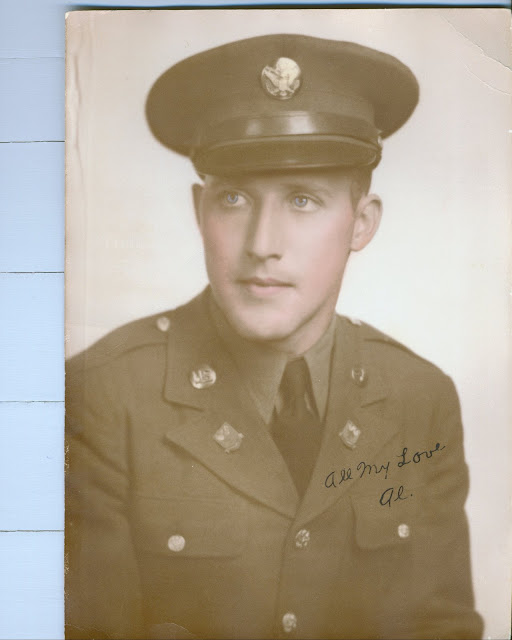
Noyes Family Genealogy: H. H. Humphrey - my Father WWII and the VFW

A submission from Al Bishop from his Noyes Genealogy Blog
Noyes Family Genealogy: H. H. Humphrey- my Father WWII and the VFW


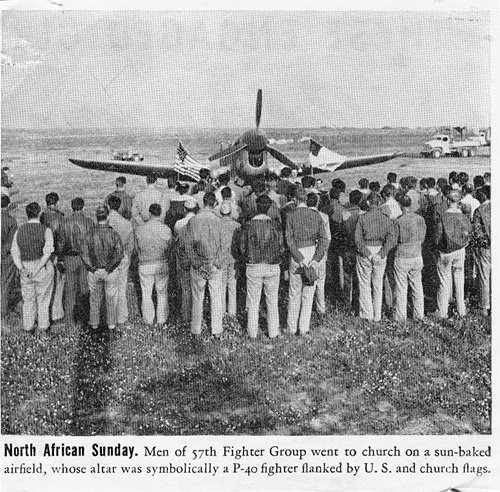
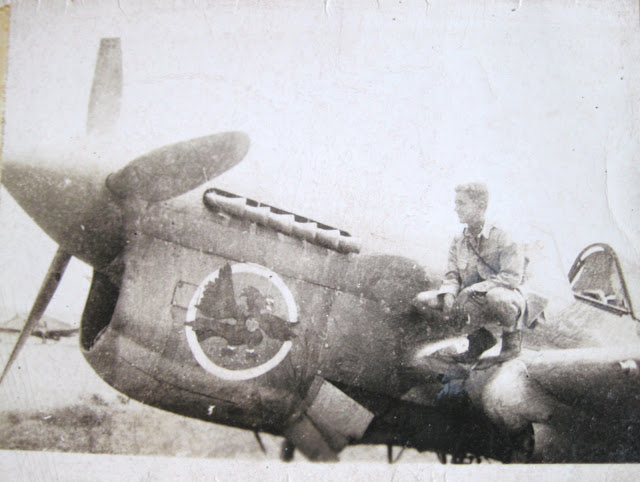
Hubert Horatio Humphrey, Jr. (May 27, 1911 – January 13, 1978) was the thirty-eighth Vice President of the United States, serving under President Lyndon B. Johnson. Humphrey twice served as a United States Senator from Minnesota, and served as Democratic Majority Whip. He was a founder of the Minnesota Democratic-Farmer-Labor Party and Americans for Democratic Action. He also served as mayor of Minneapolis, 65th Fighter Squadron “Fighting Cocks” From “Stars and Stripes” Mediterranean Edition, Rome, January 30. 1945:
WITH THE 57TH FIGHTER GROUP – Uncle Bud II came home today, the gift of Hal P. Monahan Sr. of Lake Placid, NY, in memory of his son who was killed fighting with the “Fighting Cocks” in December 1943.

Like his predecessor Uncle Bud is cocky, ill-tempered, fighting son-of-a-gun of a rooster and that’s the way the boys like him.

When Col. Phil Cochran, former commander of the “Fighting Cock” Squadron asked Milt Caniff, creator of “Terry & The Pirates,” to design the original Uncle Bud, he said, “I don’t care what you come up with, Milt, just so long as he’s a fighting son of a gun.”

Caniff chose the rooster, and Uncle Bud the First came overseas with the squadron and followed it from the hectic days of the North African campaign until he was killed by a jeep last September. Lt. Col. Gilbert O. Wymond of Detroit, the squadron’s present commander, wrote to Caniff and asked him to assist in finding a replacement.

Caniff passed the plea along to the readers of his comic strip and from thousands of replies received, he chose that of Monahan Sr., who asked that he be allowed to sponsor the rooster in memory of his son.

Republic Aviation Corp., who’s P-47’s the “Fighting Cocks” fly in combat, obtained the rooster and at a midafternoon ceremony during the employees’ rest period, Monahan presented the bird to Captains Ray Donahue, Jr. of Pittsburgh, and James Eubanks of Bronte, Texas, two members of the squadron home on 30 day leave.

The fliers smuggled Uncle Bud II on board ship by hiding him under their coats. He shared their cabin and got his first taste of army chow- C rations and fruit, which the officers managed to scrounge.

Uncle Bud II has already proved himself a “Fighting Cock.” His first official act upon being uncrated was to rout a pet dog from the kitchen.

At the officers club, he was introduced to Uncle Bud I, formerly believed by members of the squadron to be the “meanest rooster alive”, mounted in a fighting pose in a glass cage.
The new arrival immediately lashed out at the intruder with his long spurs and had to be pulled away from the glass. Said one pilot, “He’s even meaner than Old Bud himself. He’ll do.”


April 18, 1943 Goose Shoot – “The Palm Sunday Massacre”

The story has been told, and retold, beginning on that fantastic April 18, 1943. Papers all across the U.S., as well as elsewhere, trumpeted the story of how the 57th downed at least 74 Axis planes (while losing not more than 6) and causing an estimated equal number to crash land to avoid being shot down. Even though great happenings were expected from the 57th, which had become known as “America’s Flying Circus”,


Saturday, August 10, 2013

From A Grand Adventure - Looking for Relatives Margaret on the Road by Margaret T. Deiotte

This is a great story and I encourage readers to visit her travel blog.

Margaret has a wealth of information and travels all over searching deep and wide, leaving no stone unturned! We have posted two days worth of her info on the Dole, Little, Dodge, and Brocklebank lines in Newbury, MA, as well as the Blackintons and Richardsons.


Please note we have included some additional pictures here.

Day 66

Today wasn't nearly as exciting as yesterday. Once again I was knee deep in microfilm, trying to read 17th century vernacular, 18th century handwriting and going cross-eyed peering through blurry 20th century scanning.

Samuel Dole's will is one of the very pleasant ones to read. here are some inventory evaluations that you should enjoy. The spelling is theirs, not mine.)
  • funeral charges 83.45
  • soal leather and calfskin 4.25
  • one ox waggon 26.00
  • 2 ox sleds 7.00
  • chissels 2.20
  • 8 pair pillow cases 7.00
  • suit of curtains 3.00
  • 3 yards of low cloth .50
  • 32 table cloths 49.00
  • 34 chairs 21.86 (don't we wish we had a few of these now)
  • 2 pair brass headed fire shovel and tongs 1.75
  • 5 pair linen sheets 35.00
  • 51 plates 2.49
  • tar and barrel .59
  • spooling wheel, swift, shuttles, temples and blocks 2.00
  • payment of the bond and letter of guardianship for his minor child 1.10 (cheap lawyer)
Plus 3 more pages of household goods, debts and real estate. Obviously Mr. Dole was well off. We also discover his wife's name is Hanna, he has a son James, and 3 daughters (including our Sarah who marries Wm Bradford Dodge), and the will is being probated on May 24, 1808.


A more difficult document to read is an agreement of Indenture. In this paper, Mathew Soley and Henry Phillips agree that Mathew will pay the value of $150 pounds to pay off a purchase of land. Henry's wife Mary is in agreement with this document. There is more than a page of great explanation about fields, bulls, pump yards, upper and lower parts of the chimney and a multitude of other contingencies that will take me a week to decipher. In addition, the two families agree to create a permanent path to Samuel Ward's Alley that they all can use for the carrying of wood and such without regard to which yard they have to cross. Each family will own half the arbor bordering the path. Date: 20 June 1675. Very interesting but a lot of wok to get one confirmation that Henry's wife's name is Mary.

More of such fun tomorrow!

Day 67

Yes - I made progress today. Of course it helped that I could actually read the documents and page numbers.

The house of Capt. Samuel Brocklebank in Georgetown,Massachusetts c. 1668
Deeds and quasi-probate information pushed the Dole lineage back 3 generations. Samuel Jr was tied to Samuel Sr., Samuel Sr to his widowed mother Mary and deceased father William plus Mary names her father in an additional document - Samuel Brocklebanks. Yea!!

On the Dodge side, I firmly nailed down the Phineas-John-Phineas-Wm Bradford lineage through probate records. There are lots of Phineases and Johns so to straighten them out and clearly identify who belongs to whom through a combination of records is very satisfying.

Tomorrow and Saturday will be more of the same. At least the 4 day monsoon is over so I walked to the train and library in sunshine before disappearing into the microfilm cave. Off to bed - I am tired.

Day 68

Today was a day for Blackintons and Richardsons. Both families were from the Attleborough area of Massachusetts - near Providence, RI. Probate records pushed the Blackintons into the 1600s adding three more generations and 100 years to what we knew a few weeks ago. In case you have forgotten - or face it, cared - Olive Blackinton married Henry Richardson. They are the great-grandparents of Abby Jane Richardson who married George Washington Coats. If you are more visual, Abby Jane is the lady who in photos from the 1890s looks like a dried apple woman.

Back to the Blackintons. Our first ancestor in the line is now Pentecost Blackinton, Sr. He was probably born in the mid-1600s. He died in 1715. His will plus a land deed nicely name is wife (Mary) and 3 children (Pentecost Jr, Benjamin, and Elizabeth).


His son, Pentecost Jr., must have been born in the latter quarter of the 17th century since he was married by 1717 and died in 1744. Upon his death, his wife Rebeccah is left with sons Pentecost III, George and John, daughters Rebeccah, Anne, and Mary and 3 sons under the age of 14 requiring a guardian - Othaniell, Peter and Oliver. There seems to be a fair amount of land amassed as there are a plethora of land transactions throughout Pentecost Jr's life and so the family survives.

Oliver overcomes a chaotic childhood and marries Mary Whipple in the 1750s. He dies in 1810. He leaves a generous will in which he names his beloved wife Mary, son Oliver, grandchildren Charlotte, Eliza, Esther, Caroline, Ellis and Samuel, and a daughter - yes! - Olive Richardson. It is so nice that he includes her married name. Now although he has provided handsomely for everyone, he is insolvent and can't pay his bills. Letters go out to creditors including 2 Richardsons - members of his daughter's family-in-law.

For the moment, the story ends here. since both Oliver and Olive were adults when Oliver Sr dies, I imagine they took care of their mother for the last 10 years of her life. Who knows if the grandchildren ever received any inheritance bu most of them would also have been adults by 1810. George Richardson (son of Henry R and Olive B) and wife Lovicy Robbins would likely have been in Maine at this point before making their way to Michigan in the 1830s.

One more day of research remains at the NEHGS before my visit to Boston ends Tuesday morning. I know I won't get everything finished. I will definitely need a return trip!


Day 70

Well it is official. I have been on the road for 10 weeks. The time is flying by and I can't believe that the journey is half over.

 
 I spent the morning straightening the Brocklebank-Dole mess. Turns out I had all the right players just not aligned correctly. Samuel Brocklebank (10th GG) came from England in 1638 as a child with his widowed mother Jane and brother John. He became a surveyor and married Hannah Rolfe in 1659. They had a number of children and in 1668 built a house in what is now Georgetown, MA. Samuel was killed with his entire company of men in Sudbury during King Philip's War (Indians vs Pilgrims). Hannah Rolfe married a widower from nearby - Richard Dole. He had 10 children from his first marriage and 5 of them married 5 of Hannah's children. This is what I didn't know yesterday and caused a stumbling block in sorting out the lines. Hannah's daughter Mary married William Dole. They begat Samuel Dole who begat Samuel Dole who begat Samuel Dole who married Hannah Little and who begat little Sarah who married Rev. Wm Bradford Dodge - whew!
   

On the way to this new information I found that the home Samuel Brocklebank built in 1668 still exists and is a museum. It is open 2 half days a month and of course today was NOT one of those days but the weather was fine and called for A ROAD TRIP! Off I went. The house is quite large and grants from local historical societies are refurbishing the exterior. Wish I could have gone inside but it was wonderful to walk around the old family homestead. FYI - in the 1750s the home became a tavern - owned by Solomen Nelson whose daughter Lucy married Phinneas Dodge. This means two lines of the family leading to Dodges had connections to this house. What it really shows is how close the communities and how interwoven the families were.


From Georgetown, I drove to W. Newbury and found Capt. Samuel Dole and Hannah Little Dole's gravestones. They are well preserved although Samuel's stone is difficult to read. They sit on a hill under a lovely oak tree. Hannah was born in 1757 and lived a long 86 years (see stone). Then it was on to First Burying Ground Cemetery in Newbury. I searched for several hours but no luck finding Richard Dole or Hannah Rolfe Brockelbank Dole's graves. Lots of other familiar surnames - just not the 2 I was looking for.


After a long day, I met Doug and Cynthia for a nice waterfront dinner in Essex. This was our last meal together as they are staying in Boston to work and I will be in Acton for 2 nights before moving to CT.

Sunday, June 30, 2013

A Quality Brew Coffin History Newbury, MA & Nantucket

My Articles Published in Newburyport News and  Beverly Patch:

Beer has been a part of American culture since our ancestors first arrived. In fact, the ship Arabella left England with 10,000 gallons of beer and 120 casks of malt to make good cheer in the New World. A good pint will cure what “ales” you, plus it prevents scurvy and other diseases. Harvard students low on dough paid tuition fees in wheat and malt to supply the campus brew house. Early records indicate that it was mandatory for every town to establish a licensed ordinary or else incur a fine. At the time, inn holding was considered a very reputable occupation, and Newbury had a top-shelf resort operated by Tristram and Dionis Coffin, who the records indicate were licensed for business on May 26, 1647.

            The Coffins ran a ferry on the Newbury side of the Merrimack, receiving "two pence a person out, and two pence back, and four pence a beast.” The original structure is no longer standing, and to set the record straight, Tristram, Jr. rather than his father owned the historical “Coffin House,” located on 14 High Road (1678) in Newbury. Many sources list this as the location of the tavern, which is incorrect. Records indicate the Coffins owned forty acres across from Carr Island. In later years, the road to the Inn, known as Coffin Lane, was located on the west side of present day Jefferson St., down by the shore of the Merrimack River.


            In 1645, the government passed regulations requiring that "every person licensed to keep an ordinary shall always be provided with good wholesome beer of 4 bushels of malt to the hogshead, which he shall not sell above 2 pence the ale quart. Whosoever failed to comply with the provisions of this law should forfeit for the first offence forty shillings & for the second offence shall forfeit their license." In general, Puritan laws were not open to interpretation, and those who stepped out of bounds were hauled in for examination.

            In spite of the regulations, Dionis decided to tap into a new recipe for beer that was stronger and stouter than her competitors’ brew. One source suggests she consulted “Hodder’s Arithmetic,” exclaiming, "as four is to two, so is six to three… I'll have better beer than my neighbors and be paid for it— A fig for the law." Her magic elixir made quite a splash, and even at the illegal price of 3 pence a quart, it sold well.

           Local officials heard the buzz about the chichi ale, which brewed trouble for Dionis, who was presented a summons for overcharging. She appeared in court in September 1653, ready to do battle, assert fermentable trust in her barley pop, and serve these officials a cold one. Mr. Samuel Moore gave testimony that she did indeed mix “six bushels of malt into each hogshead,” which was more than the law allowed, but he asserted that she produced a better quality brew and therefore should be allowed to charge a premium price. The issue was resolved quickly and all charges were dropped— perhaps she slipped the city elders a jug or two.

            According to Bethany Groff, a local historian and direct descendent of Dionis (9th great grandmother), “Dionis’s brewery is one of the first accounts of women business records, and she defended her product for its quality and higher prices, as crafters of home brew still do today.”  In this way, Dionis set precedence for future entrepreneurs as well as her female ancestors. Her daughter Mary Coffin Starbuck industrious and held many titles, among them “the Great Merchant.” Mary also became the first Quaker minister of Nantucket, playing a pivotal role in converting the whole colony to the Quaker faith.


Lucretia Coffin Mott

Lucretia Coffin Mott, also a Quaker minister, abolitionist, and suffragist wrote, “The exercise of women talents in this line, as well as the general care which devolved upon them in the absence of their husbands, tended to develop… and strengthen them mentally and physically.”

            The Coffin family produced as many exceptional offspring as there are distinct craft brews in this country. Perhaps the Puritan lifestyle was simply not free-flowing enough for the first Coffin line. Instead, they found a locale that sourced freedom, eventually establishing Nantucket along with the Starbuck, Macy, and Folger families. Tristram, Sr. became Chief Magistrate for Nantucket; however, Tristram, Jr. settled in Newbury, and so did several generations thereafter and held many high positions locally.


            Thankfully, the brewing industry continues to prosper in Newburyport. Natives Bill Fisher and Chris Webb, who just opened Newburyport Brewing Co. at 4 New Pasture Road, are certainly carrying on in the tradition of Dionis Coffin. Their three debut brews are Plum Island Belgian White, Newburyport Pale Ale, and Green Head IPA, “The Beer That Bites You Back.”
 Visit www.nbptbrewing.com for more info.

Find out more about the Coffin House and other local historic sites at: www.HistoricNewEngland.org.

 http://www.islandregister.com/rcoffin/pg1_25.html

Popular Post