Showing posts with label Ipswich MA. Show all posts

Wednesday, December 10, 2014

Doctor Thomas Berry, “Last of the Ipswich Aristocracy”

Towns people bowed to the aristocratic Dr. Berry when he passed by in his “chariot” with his long scarlet cloak waving in the wind.

Thomas Franklin Waters wrote that in the first half of the Eighteenth Century, Col. Thomas Berry was the most conspicuous citizen of the Town, “Autocrat of his time, Magistrate, Military leader, Physician and Statesman.” Born in Boston in 1695 and a graduate of Harvard, he married Martha Rogers, daughter of the Rev. John Rogers of Ipswich in 1717 and made his home here. She died in 1727 at the age of thirty-three years, and a year later he married Elizabeth Turner of Salem. Dr. Berry practiced as a physician and was also Colonel of a regiment, Representative to General Court, 1727-1730, Justice of the Sessions and Common Pleas Courts and afterward Chief Justice, Judge of Probate, member of the Governor’s Council from 1735 to 1751, and Feoffee of the Grammar School. Read More by clicking link  December 10, 2014 · by Gordon Harris Thomas Berry Article

Saturday, December 6, 2014

Mariner Man Poses as Preacher: Sex Scandal in the Port

From my article in The Current Newburyport Wicked Local Article Friday December 5 2014 Special Thanks to Katherine Chaison Curator Ipswich Museum formerly Ipswich Historical Society 54 South Main Street Ipswich, MA 01938

Colonel Wade's house in Ipswich, courtesy of the Ipswich Museum.

In the spring of 1823 the Port became the center of a notorious sex scandal. Some of the most prominent men came forward to defend the honor of their pious lady lambs against a philandering preacher knee deep in the dirt.
          The case of the Commonwealth vs. Michael Doak Dennis took place in late March and sent shock waves through the community. As the trial unfolded it attracted attention from all of New England. Even the Farmers Almanac released briefings on the court drama.
           Mrs. Lydia Randall, the victim in the case was “a respectable married woman” known for her great charities. An unfortunate turn of events caused her to seek relief from “Father” Dennis.  Her poor husband was placed in the County House of Ipswich because he went insane. During Christmas season she became melancholy and Dennis offered her a ride in his warm chaise to see her husband.         
          Mrs. R accepted the invitation, but would end up in a most compromising position. Dennis got frisky from too much whiskey and Mrs. R charged him with “lewd and lascivious language” and “wanton and indecent conduct.” 
          According to the reports Dennis was “bred as a mariner” and spent most of his career “on board as a man of war,” but got an itch to try his hand at preaching the gospel. He must have had the magic touch for his flock flooded with followers, most of them married women. 
           Before Dennis was indicted many “good and wise people” thought he was an “instrument of the Lord’s hand” and gave a heads up to work his new godly unit. His marriage to Sally Woodwell gave him special favor as well. His in-laws were well known in the Port.
          Gideon Woodwell, JR owned a ship yard in town with Enoch Hale. He served in the navy during the Revolution and was noted for his brave role in the capture of British ship Friends at Plum Island.  During the War of 1812 he served as a ship carpenter upon board the Constitution which he also helped to build in 1797. Gideon’s wife Sarah Bray was equally matched with her sturdy good stock.
          The strong connections however went limp and Dennis was put in the dog house.  When the court approved for a committees to investigate the incident it was upon the request of Dennis. However Woodwell knew his son-in-law was guilty and made sure the fine daughters of the town stayed above water.
          The list of men would have been on familiar terms with the family---were Davenport, Currier, Nelson, Morse, Foster, and Col Wade, Keeper of the House of Corrections. Although Mrs. R was the only one pressing firm legal recourse, the men knew of other women who had been sniffed out by Dennis and according to Newburport Herald Dennis was using his new position to woo.
          During the hearings Wade affirmed he dined with the pair on the night of the incident. He corroborated with Mrs. R. testifying that when Dennis finished his meal he slipped out to get a quick trim of the whisker, but returned several hours later “all liquored up.” 
          Mrs. R. stated that the intoxicated Dennis approached her bent over and shouted: “You trollop I have a good mind to knock you down.” When she asked him why he told her she was a prude for not offering even a kiss. He slithered back to his seat and drank a few more hours.
          Dennis came to her later and “with much familiarity” said he was ready for nap. He realized his advances were going no where and made ready to bring her back home.
          During the ride back Mrs. R told the court that Dennis seemed to have stiffened with silence perhaps due to the cold, but his lusty loins regrouped when they passed through Rowley. He forced a kiss on her while touching her bosom and stroked her muffs hoping to gain entry. When she pushed him away his paws sought out her thighs, but she would not submit and proceeded to lecture him on his “unbecoming conduct not proper for a man of his profession.”
          Dennis knew Mrs. R would blow the whistle and his glory days of preaching to the pretty Port gals were numbered. He did not deny the charges, but “wished he could remember them.” he told the committee that “if Mrs. R said it happened than it must have as she was a pious lady.”              
According to Salem Gazette Judge Williams appeared soft on Dennis at the start of the hearings when he asked him if he was only guilty of intoxication, but Dennis lowered his head and told him “I am afraid not.” What sealed his fate and left no doubts in the minds of the jury were the examinations brought in by the committee members. The rest of the flock admitted that Dennis often favored the flesh over the spirit. 
          The jury returned a quick verdict and Dennis was sentenced to three months imprisonment. His attorney appealed arguing that “a moderate fine should be sufficient to satisfy public justice,” but Judge Williams concurred with the counter appeal: “it is upon absolutely necessity to exemplary punishment by imprisonment as it would ensure the safety of the pious women.” No doubt the judge wanted to make Dennis an example. Dennis surrendered and exclaimed “the Lord hath done this!” He would have to lie in the bed he made and his “sheep” thrills were all for “mutton.” 


 Stories From Ipswich and the North Shore Thomas Franklin Waters wrote about the old court building: "Our survey cannot be completed without a glimpse at the small grass plot, in front of the Methodist Meeting House. Here the first Town-house was built... It was replaced by a new building, erected at the joint expense of Town and County, in 1793-94, a much more pretentious structure with a high belfry or steeple. It stood with its rear end close to the high ledge, which has been blasted to its present level, but which was originally as high as the eaves of the building itself. Thus, in close proximity to prison, stocks and whipping post, the Courts held their stately sessions from 1704 to 1854, when they ceased their sittings, and the house was sold and removed to the corner near the railroad station. It was utilized by Mr. James Damon for a hall and stores, and was totally destroyed by fire, April 14, 1894." 

Sources from History of Newburyport J J Currier, Salem Gazette, Newburyport Herald, New England Farmer, Portsmouth Herald, Commonwealth vs. M D Dennis,

Saturday, May 10, 2014

Cutting Family Line of Boston

Research started with Frederick L. Cutting born in Boston, Ma August 14, 1842. He was the son of Henry Cutting and Eunice Lord. Henry Cutting married first, Harriet Ardelia Fenno of Chelsea, MA. January 27, 1829.
Henry and Harriet had a daughter named Harriet A F Cutting Barker who died November 14 1865 in Sommerville.She was 31.
Henry's wife Harriet passed away on June 6, 1836  (See Records below)  Family information on Fenno line according to "Genealogical and Personal Memoirs of the Families of Boston and Eastern Massachusetts Volume 4"  Harriet's father Deacon John Fenno, son of William Fenno and Sarah Endicott, was born in Canton, January 1, 1766, died in Boston, July 26, 1835. He kept a grocery store on Hanover street, Boston, and was a deacon of the New North Church, in the time of Rev. Francis Parkman. He was the first of the Fenno family to settle in Chelsea, where he bought a large tract of land. He married, 1793, Olive Pratt, born April 10, 1770, died in Chelsea, November 24, 1856, daughter of Nehemiah Pratt and Ruth Torrey, of South Weymouth, Massachusetts. Their wedding was the first in East Boston. 

Harriet's brother Joseph Fenno erected a building in Chelsea, that part now Revere, corner of Beach street and Broadway, and has been since known as Fenno's Corner. There he conducted a mercantile business to the time of his death; was continued by his son, Joseph Henry Fenno, and by his son, Warren Fenno, and on the death of the latter, in 1905, the business was closed to settle the estate.

William Fenno an enterprising merchant of Revere, was born in North Chelsea, December 2, 1854. His father, Joseph H. Fenno, was born in Boston, June 21, 1823; and his mother, whose maiden name was Harriet E. Tewksbury, was born January 25, 1829. She was a daughter of John Tewksbury and Sarah Williams and grand-daughter of Lydia Sprague, whose father, Captain Samuel Sprague, when over sixty-two years of age, responded to the Lexington alarm and organized a company which was mustered into the Continental army. He died in Chelsea in 1783
The Fenno's original American ancestor on the paternal side was John Fenno, a farmer, who emigrated from England (from Lancashire, it is thought), and settled in Milton, Mass., in 1660. He served in King Philip's War. From him the line of descent is traced through John,2 John,3 William,4 John,5 Joseph,6 and Joseph H.,7 to Warren,8. Sarah Endicott was born on August 10, 1741, daughter of Captain James Endicott and Esther Clapp Endicott. James Endicott son of Gilbert Endicott (brother of John Endicott)


The Fenno House at Old Sturbridge Village was moved there in 1950 from its original site in the town of Canton, where it stood ouside the center village. This property was acquired by John Fenno in 1694 and either he or his son, also named John, is thought to have built the house in 1704. Photo courtesy of Historic Buildings of Massachusetts.

              Another landmark John A Fenno House Newton 

Below are two entries from Boston Papers on Harriet's death:


Henry Cutting married second wife Eunice Lord in the town of Ipswich, Massachusetts on December 30, 1792 also it is recorded in Malden Vital Records: Henry of Boston and Eunice Lord, Sept. 12, 1839. Also, next to Henry is the marriage of George W. Cutting of Weston, and Elisabeth Lord, Jan. 3, 1829. Eunice was daughter of Daniel Lord. 
Daniel Lord, son of  Aaron Lord and Hannah Lord (daughter of James Lord and Mary Fuller) married Sarah Holland (See More Lord Family Records Below) 
Children of Henry and Eunice
Henry Cutting died April 25, 1901
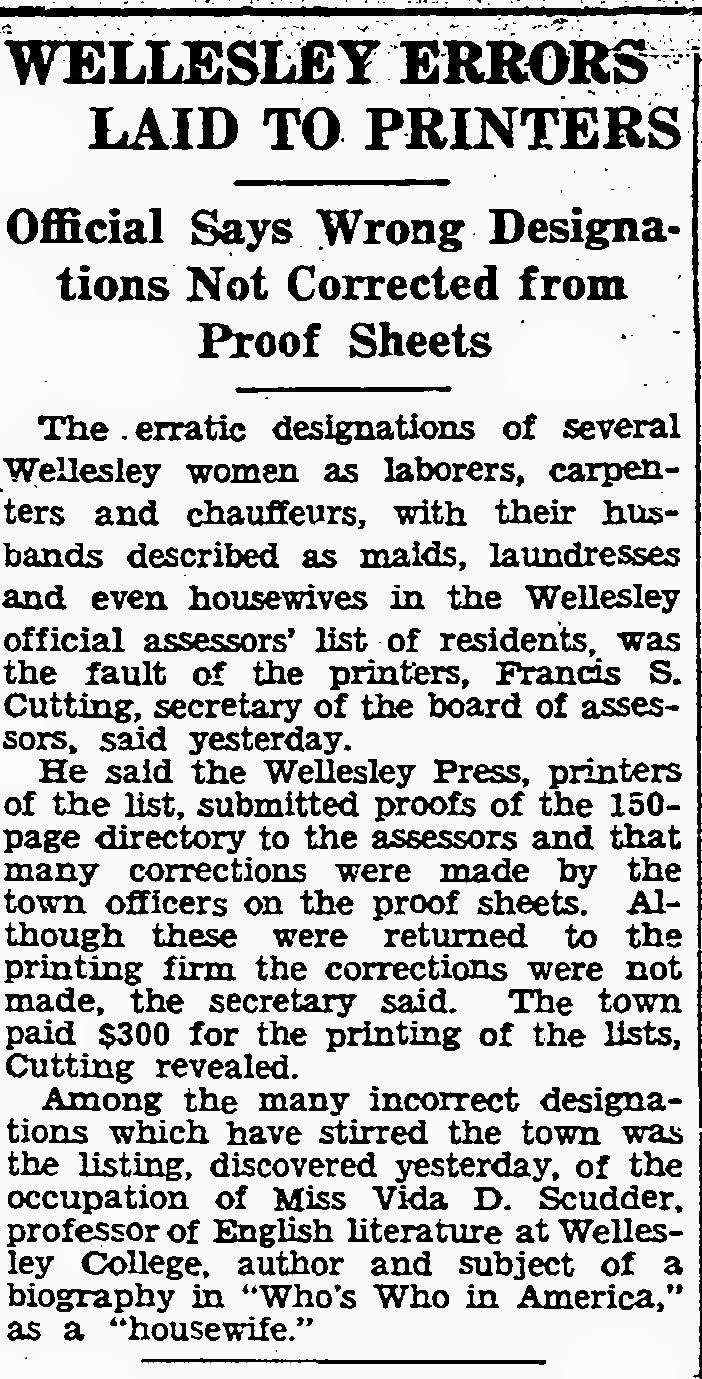
Francis Stanton Cutting was born on October 30 1868 in Chelsea, MA. He married Florence Davis, daughter of  Ella Florence Slade and Henry Hall Davis 
Francis and Florence had two sons Stanton  Davis Cutting and Richard F Cutting (See Below)

Ella F Slade (Davis) was was born on June 19, 1846 in Chelsea, Suffolk County, Massachusetts. She was the daughter of Levi Slade and Elizabeth Snow. She married Henry Hall Davis on January 7, 1869. She died on November 24, 1912 in Chelsea, Suffolk County, Massachusetts, at age 66. She was buried in Woodlawn Cemetery, Everett, Middlesex County, Massachusetts, Tombstone reads 'Ella A. Slade.'
Levi Slade was the son of Henry Slade and Sally Danforth
 

Levi Slade Birth 17 April 1822 in Chelsea, Massachusetts Death January 9, 1884 in Chelsea, Ma Co-founder of D.& L. Slade Spice Company. Owner and Treasurer between 1864 and 1884
From  Thursday, February 6, 1908 Paper: Boston Herald (Boston, MA) Page: 8


Mason Lodge Membership Card Francis S Cutting


This is an interesting find and from the census I gathered on all the Cutting families the help was included as members of their household This is from Boston Herald December 29 1931


Stanton Davis Cutting born February 14, 1896 in Chelsea MA. He was an athlete Draft Card Stanton Cutting


Mason Lodge Membership


Sunday, January 9, 1972 Paper: Boston Herald (Boston, MA) Page: 45


Friday, January 24, 1913 Paper: Boston Herald (Boston, MA) Page: 13


Mason Membership Card


MEMORIAL OF FREDERICK L. CUTTING as published in The weekly Underwriter Volume 79

The committee on the preparation of a memorial of the late Insurance Commissioner Cutting, of Massachusetts, presented the following, which was unanimously adopted:

We, the insurance commissioners of the United States in convention assembled, deem it fitting to adopt this memorial of Frederick Lord Cutting, our late associate in the labors of many years, as an expression of our appreciation and respect.

Frederick Lord Cutting was born to a life of service. While but a youth he enlisted at the call of President Lincoln, and bore his part with honor until the close of the war. He was frequently assigned for special duty, and did it well. His discharge from the army did not send back to the North a man of demoralized character, but one fit to stand as a man among men, one as eager to enter upon the calm pursuits of peace as he had been to do his duty in the rough turmoil of war. His first call upon arriving home was to serve in the Adjutant's General's department of bis home State, which gave him congenial employment.

But what may be called his life work was in the Massachusetts Insurance Department, to which he was soon transferred, and where he rose from clerk to Insurance Commissioner, occupying the latter position for ten years of his thirty-five years in that department of labor. His resignation took effect November 30 and his death occurred on the seventh day of the new year following.

For many years before he became commissioner he attended the meeting of this convention, and served as its secretary as long as he would consent to hold the office.

He. as deputy commissioner and then as commissioner, worked on important committees. He had no special gift for performing what may be called the ornamental functions of the convention, but in doing the sturdy homely duties which pertained thereto he was ever at the front. He had opinions which he expressed in a positive way. His honesty was rock ribbed, he was inclined to distrust compromises, and made his way rather by his force of character than by dodging to the right and left to avoid collision. He was never a seeker for public approbation, or for official preferment. It was against his will that be accepted the presidency of this convention, and in fact it required much urging to induce him to take his original appointment as Insurance Commissioner. He formed many close friendships among his fellow members of this convention, and always expressed his delight when a good official was given the reward of his faithfulness by a reappointment.

On the private and personal side he was kind, sympathetic and tender hearted, yet he had an inflexible will which kept him true to his high ideals in respect to virtue, temperance, devotion to his family and loyalty to his convictions.

His service to the business of insurance it is difficult to measure, but we do know that be stood for sound companies, honest management, full publicity and a supervision in fact as well as in name. The public is better off because Frederick L. Cutting lived, and the insurance commissioners have a worthy example to emulate.

While we mourn his loss we rejoice that we have had the benefit of his labors, known the inspiration of his presence, and felt the satisfaction of being able to point to him as "one of us." It is such men and what they stand for that gives strength and character to an organization like this, and afford a prophecy of the coming of the Kingdom of Righteousness on earth.

A resolution was adopted directing the secretary to send a copy of this memorial to the family of Mr. Cutting and to spread it on the minutes of the convention.

On Boston Record  Boston, Mass., January 21, 1908

Truly a man great in Israel was gathered to his fathers when the life of Frederick Lord Cutting was snuffed out as a candle. It seems but yesterday that this gentle autocrat sat expounding the law in the commissioner's chair. The vigor of his language was tempered by his kindly eye, and those who knew him best saw in him a man white to his heart's core, incapable of meanness, sternly just and ruggedly upright in every thought and action. He was the New England conscience personified, and jealous he was of the fair name of his beloved department. He had the weakness of his virtues— stubborn to a degree, so exacting that he leaned backward. His epitaph might well be written, "Here lies an honest man," for honest he was In thought and in action throughout his simple, upright and wholesome life.

Death Certificate of Frederick Cutting 


From Thirtieth Annual Report of the Insurance Commissioner of the Commonwealth of Massachusetts 1885 Part 1: Fire & Marine Insurance


From Frederick is Cutting Dies in Wellesley Veteran of Civil War and until November Chief Insurance Date: Thursday, January 9, 1908 Paper: Boston Journal (Boston, MA) Issue: 24285 Page: 2


From Wednesday, February 5, 1908 Paper: Boston Herald (Boston, MA) Page: 12


MORE ON LORD FAMILY OF IPSWICH MA:

Aaron10 Lord (Nathaniel Jr9, Nathaniel8, Robert Sr7, Robert6, Anthony5, John4, Tomas3, Hari2, William1) was born May 28, 1732 in Ipswich, Essex, MA (Source: Vital Records of Ipswich Massachusetts to the end of the year 1849, (Published by The Essex Institute, Salem, Mass, 1910).), and died March 24, 1811 in Ipswich, Essex, MA (Source: Vital Records of Ipswich Massachusetts to the end of the year 1849, (Published by The Essex Institute, Salem, Mass, 1910).). He married Hannah Lord July 01, 1754 in Ipswich, Essex, MA (Source: Vital Records of Ipswich Massachusetts to the end of the year 1849, (Published by The Essex Institute, Salem, Mass, 1910).), daughter of James Lord and Mary Fuller. She was born September 08, 1734 in Ipswich, Essex, MA (Source: Vital Records of Ipswich Massachusetts to the end of the year 1849, (Published by The Essex Institute, Salem, Mass, 1910).), and died June 29, 1812 in Ipswich, Essex, MA (Source: Vital Records of Ipswich Massachusetts to the end of the year 1849, (Published by The Essex Institute, Salem, Mass, 1910).
Aaron Lord: Tailor Will: 9 Dec., 1809 Will proved: 21 Apr., 1811
Probate Record 380:347 -- Darling Papers page 34b

Daniel11 Lord (Aaron10, Nathaniel Jr9, Nathaniel8, Robert Sr7, Robert6, Anthony5, John4, Tomas3, Hari2, William1) was born June 25, 1766 in Ipswich, Essex, MA (Source: Vital Records of Ipswich Massachusetts to the end of the year 1849, (Published by The Essex Institute, Salem, Mass, 1910), 241.), and died March 04, 1816 in Ipswich, Essex, MA (Source: Vital Records of Ipswich Massachusetts to the end of the year 1849, (Published by The Essex Institute, Salem, Mass, 1910), 616.). He married Sarah Hollond December 30, 1792 in Ipswich, Essex, MA (Source: Vital Records of Ipswich Massachusetts to the end of the year 1849, (Published by The Essex Institute, Salem, Mass, 1910), 279.), daughter of John Hollond and s.Mary Perkins She was born July 29, 1769 (Source: E.E. Fewkes, Darling Papers Volume 131, 53a.), and died October 02, 1846 in Ipswich, Essex, MA (Source: Vital Records of Ipswich Massachusetts to the end of the year 1849, (Published by The Essex Institute, Salem, Mass, 1910), 621.).  Daniel Lord: Died of jaundice--Vital Records of Ipswich, page 616
Daniel Lord and Sarah Holland parents of Eunice Lord, b. May 18, 1811, Ipswich, Essex, MA (Source: Vital Records of Ipswich Massachusetts to the end of the year 1849, (Published by The Essex Institute, Salem, Mass, 1910), 243.).

Mary Perkins born December 9 1636 daughter of  Mathew Perkins and Esther Burham.  Ipswich Town Records


Daniel Lord and Sarah Holland
Burial: Highland Cemetery Ipswich Essex County Massachusetts, USA Created by: John Glassford Record added: Dec 05, 2011 Find A Grave Memorial# 81584921


Captain John Holland & Mary Perkins Weskeag Village Cemetery
South Thomaston Knox County Maine, USA Created by: Andrew
Record added: Aug 04, 2010 Find A Grave Memorial# 55863151

Henry Slade Birth Aug. 18, 1791 in Chelsea, Ma Death Nov. 26,1868 in Chelsea, Ma

More on Genealogy From  

George Warren Cutting, son of Ephraim (b. East Sudbury, 1774; m. 1802; d. 1866) and Theoda Pratt Cutting, born 1805, in Roxbury; settled in Weston in 1822; bought the Jonathan P. Stearns grocery business in 1833; married 1830, Elizabeth Lord, of Medford (b. 1807; d. 1893); was postmaster from 1859 to 1885; for 52 years conducted the only grocery in Weston; held many offices within the gift of the people; was highly esteemed by the community for his great amiability and strict integrity; died 1885. Children:
Caroline Elizabeth Cutting, born 1831; married George Willis; died 1888.
Sarah Lord Cutting, born 1833; married Theodore Jones, death 1863. 

George Warren Cutting, born 1834; married Josephine M. Brown.
Harriet Fenno Cutting, born 1838; married William C. Stimpson, killed at Poplar Spring, Va., Sept. 30, 1864, 35 Reg. Mass. Vol.
Margaret Lord Cutting, born 1842; married Isaac E. Coburn; died 1907.
Emma Louisa Cutting, born 1844.
Ellen Marion Cutting, born 1846; died 1849.
Edward L. Cutting, born 1850; married Caroline Augusta Keniston.
George Warren Cutting, Jr., born 1834; married 1865, Josephine M. Brown; became associated with his father in business. In 1875 the firm bought the Lamson store, property that had been in the Lamson family for 150 years. In 1864 upon the death of Nathan Hagar (died Nov. 14, 1863), he was chosen town clerk, and has served continuously in office since. He was representative in 1889, and assessor for a number of years, a trustee of of the Merriam Fund; a highly esteemed citizen, and is now postmaster.
His children are:
Sarah Lillian Cutting, born 1866; married Arthur B. Nims.
Alfred Leslie Cutting, born 1868; married May C. Livermore.
Bessie Brown Cutting born 1874; died 1876.
George Warren Cutting (2d) born 1877.
Eleanor Mabel Cutting born 1880.
Edmund Eugene Cutting born 1882; died 1882.
Alfred Leslie Cutting, born 1868; opened a grocery store on North Ave., in 1888 and was appointed postmaster at Kendal Green when he was 21. He married 1890, May C Livermore, daughter of Charles H. Livermore and Almira Child, and became associated with his father and brother-in-law in business. He was elected a selectman in 1900 and continuously since; Representative in 1908 and re-elected for 1909. He is deservedly popular, trusted and esteemed. Corporal Henry L. Brown, Assessor, was born in 1840. David Weston Lane, Assessor, born in 1846, is Chairman of Park Commission. Henry J. White, Town Treasurer and Collector, born in 1828, has served the town as representative, assessor and selectman. His father Henry J. White came to Weston from Hallowell, Maine.
 
Cemetery-Woodlawn Cemetery Everett, Massachusetts, USA
George W Cutting and Elizabeth Lord Cutting Burial: Weston Central Cemetery

Friday, April 4, 2014

Thomas Foulds Ellsworth Ipswich MA Hero & Medal of Honor

Melissa Berry and Laurie Short Jarvis sharing Archives & Memorabilia Captain Thomas Ellsworth was one of four soldiers who earned the Medal of Honor for heroism during the battle at Honey Hill, South Carolina, on November 30, 1864. Under a heavy fire he carried his wounded commanding officer from the field, thereby saving his life and preventing him from being captured.


Thomas Fouls Ellsworth was born in Ipswich, MA November 12, 1840. He was the son of Benjamin Noyes Ellsworth (1812-1902) and Laura Ann Titus (1810-) daughter of John Smith Titus (1780-1868) and Sally Boyton (1784-1871). Laura was formerly married to Timothy Jewett Ellsworth of Salem, MA. (see records below) More family photos end of post Benjamin N Ellsworth son of William Ellsworth and Esther Noyes. Pictures of Benjamin Noyes Ellsworth and Laura Ann Titus below from Short family and Ipswich History


This is an early photo of Benjamin Ellsworth standing in front of the Ipswich lighthouse. Benjamin Ellsworth was keeper at the Ipswich Range Lights from 1861 until 1902. He was appointed by Abe Lincoln. The lighthouse was taken down and moved in 1939.


Thomas married Harriet Taylor Colby March 6 1861. Harriet born November 1 1841, was the daughter of George Curwin Ward Colby (Isaac4, Isaac3, Isaac2, Anthony1) and Harriet Kitchen
George married first Dorothy B. Philbrook, daughter of Simeon Philbrook on March 27, 1825. The family lived on the present Arthur Taylor place and then removed to Newburyport, MA.  George was a truckman and had extensive business for several years. The house was located on 62 Middle Street. Dorothy died Sept. 12, 1831, and he married Harriet Kitchen/Kitching April 27, 1832.

Harriet Taylor Colby Ellsworth
                                                       
Thomas and Harriet Children:
Elmer Foulds Ellsworth Born October 10th 1862 Massachusetts, Died November 28th 1915 in Pasadena, California.
Herbert Lee.  Born in Newburyport , Mass. October 19th  1866, Died Pasadena March 31st 1963 m  Mary Elizabeth Geyer
Alfred Hartwell. Born February 2nd 1868 Ipswich, Mass.  Died December 27th 1932 in Pasadena, Calif. 
Edward Kinsley., b May 20, 1871
Susie Taylor, b. June 15, 1874. Death April 1881 in (Scarlet Fever)
Info from "History of Sanbornton, New Hampshire, Volume 2" By Moses Thurston Runnels

Saturday, October 3, 1874 Boston Daily Advertiser


Back of photo recorded by Laurie Short Jarvis  GGG Uncle Captain Thomas Foulds Ellsworth, son of Benjamin Noyes Ellsworth (Ipswich lighthouse keeper during the 2nd half of the 1800's) Received the Congressional Medal of Honor for saving the life of his wounded commanding office who was trapped under his horse at the Battle of Honey Hill. He was in the 55th Black Infantry out of Mass, referred to as the 'overflow unit' for the infamous 54th of "Glory' fame. The men from the 55th were moved into the 54th after the 54th received heavy casualties. The 54th and 55th fought side by side at Honey Hill. Was wounded at Gettysbury 2/3/1863


Thomas was wounded in the ankle at Gettysburg July 3, 1863, but not considered disabled so he reenlisted. He was discharged January 19, 1864 on receiving commission of of second lieutenant in the 55th Massachusetts October 4, 1863. He became first lieutenant June 20, 1864 for his bravery and promoted to Captain December 1, 1864. He was awarded one of our country’s top honors for saving the life of his commanding officer in the battle of Honey Hill in 1864. Under heavy fire, and at great risk to his own life, he carried his wounded commanding officer from the field of battle. Ellsworth had joined the Union Army’s Second Massachusetts Volunteers as a private while still in his early twenties and went on to see action in numerous battles including Chancellorsville and Gettysburg.  He was promoted to an officer due to his reputation for bravery under fire. Ellsworth faced a major challenge when he was selected to serve as an officer of a company in one of the first regiments made up of “colored soldiers” in the Union Army, the Massachusetts 55. This regiment struggled to get the respect and support that they deserved, but went on to gain distinction for their valiant actions in battle in South Carolina. After the war, Ellsworth worked for many years as an officer of the Boston Custom House. In the 1890s, he moved to burgeoning city of Pasadena where he and his son ran a successful contracting business. He also organized Post 100 of the Grand Army of the Republic Friday July 16, 1869 in Ipswich.


Medal of Honor Valor Awards Earned The Medal of Honor During the Civil War For heroism November 30, 1864 at Honey Hill, SC


From Record of the service of the Forty-fourth Massachusetts Volunteer Militia in North Carolina, August 1862 to May 1863


HISTORY OF 55th MASSACHUSETTS VOLUNTEER INFANTRY  by Katherine Dhalle
Copyright 1995. LWF Publications. Posted from Lest We Forget, Volume 3 - Number 2, April, 1995.
So much has been written recently about Colonel Robert Gould Shaw and the 54th Massachusetts Volunteer Infantry. The movie “Glory” brought their story to the silver-screen and enhanced our historical and cultural awareness of the role black soldiers played in the Civil War. Yet few people know that there was a sister regiment to the 54th - - the 55th Massachusetts. Even fewer know that the 55th trained at the same camp as the 54th and like her sister regiment, went without pay for nearly 18 months. Ironically, on July 18, 1863, just hours before the 54th Massachusetts launched its historic, ill-fated charge on Fort Wagner in far-away South Carolina, the 55th was presented its regimental colors by Massachusetts Governor John A. Andrew. Both regiments would experience the same bigotry at the hands of the government and their fellow soldiers, and both regiments would eventually be brigaded together and would fight and die, side by side at Honey Hill, South Carolina on November 30, 1864.


In January of 1863, after the incorporation of the Emancipation Proclamation, Governor Andrew asked for and received permission from the War Department to recruit a Negro regiment for the Union Army. Recruiting efforts began in earnest when George Stearns, a friend of the Governor’s formed a string of recruiting stations across the northern states. To complete his endeavor, he enlisted the help of John Mercer Langston. Langston was so successful in his assignment that when more men that necessary showed up for enlistment, the 55th Massachusetts was formed. Everywhere Langston went, he found “colored men enthusiastic for the Union, and ready and anxious to prove their loyalty by their deeds.” From Ohio alone, a total of 222 men enlisted in the 55th - - “a number almost twice as large as Pennsylvania and far greater than any other northern state.”

Recruits for the 55th began arriving at Camp Meigs in Readville and they immediately moved into the barracks recently vacated by the 2nd Massachusetts Cavalry. Norwood Penrose Hallowell and Alfred Stedman Hartwell were designated Colonel and Lieutenant Colonel respectively, both having been promoted from the already-formed 54th. Charles B. Fox of the 2nd Massachusetts was promoted to Major.

On May 28th, Robert Gould Shaw and the 54th Massachusetts left Boston and marched into history. That same day, “the recruits of the 55th were transferred to the barracks thus vacated, and the routine of drill and discipline began” and continued until July 21st when orders were received for the 55th Massachusetts to embark for Newbern, North Carolina.

The regiment had originally been ordered to proceed to New York, but the recent Draft Riots in that city curtailed any such plans. “Owing to the excited state of the public mind, and a heavy shower, which commenced before the column reached the wharf, the comtemplated review by the Governor on the Common was omitted. The regiment marched through Boston with loaded muskets and fixed bayonets and five rounds of ball cartridges per man.”

Shortly after their arrival in North Carolina, news came of the severe repulse of General Gilmore’s forces at Fort Wagner and the 55th was ordered to report to Folly Island, next to Morris Island. For over six months the regiment was at work in the trenches on Morris Island, and on picket duty and fatigue duty. It was this duty that in September of 1863, led to the Confederate evacuation of Forts Wagner and Gregg as well as the construction of the “Swamp Angel” battery. On this battery was erected a 200 pounder Parrott gun which was used to shell the City of Charleston.

On September 24th, Colonel Hallowell left for the North on a 30 day furlough to receive treatment for an old wound in his arm that he had received at the Battle of Antietam. He would not return to the regiment and was obliged to resign his commission. Alfred Hartwell and Charles Fox were soon mustered in as Colonel and Lieutenant Colonel with Sigourney Wales as Major.

Ab out this time, rumors regarding the pay of the regiment’s enlisted men began circulating the camp. When first organized, the 54th and 55th had been assured by both the War Department and Governor Andrew that they would “receive the same pay, rations, and clothing,” as white troops.5 However, the men were offered the sum of only $10.00 per month, less $3.00 for clothing allowance. “The enlisted men refused almost unanimously to receive this offer, preferring to await a decision of the War Department, or the action of Congress, to give them their just dues."

Governor Andrew pressed the issue of a supplemental pay act and this law passed the Massachusetts Legislature on November 16th. On December 11, 1863, Major Sturges, paymaster for the state and Mr. Edward W. Kinsley, a Boston merchant arrived at the camp on Folly Island to offer the men the difference between the $10.00 a month, and the promised $13.00...but the men respectfully declined it. “They felt that their manhood was at stake. They were regarded as good enough to be killed and wounded, and to work in the trenches side by side with white soldiers, so they said they would wait until they got their dues."

In February of 1864, the regiment was ordered to Jacksonville, Florida to join an expedition under General Truman Seymour. On February 19th, six companies of the 55th were marched out approximately 13 miles in the support of Seymour’s forces (the 54th among them), who on the 29th, would fight and lose the Battle of Olustee. At no time was the 55th engaged and on the 22nd, the entire regiment would return to Jacksonville and later be moved to Palatka, Florida.

From that camp on April 7th, Colonel Hartwell wrote to his old friend Edward Kinsley: “I can hardly write, talk, eat or sleep, I am so anxious and indignant that pay is not forthcoming, or official assurance of pay, for my men. Can anything be done to hasten this thing? No man staying home can imagine how great and terrible is the wrong done these men, and the distress they suffer. I do all I can to make things right, and there is a great deal to almost discourage us. The wives of the men, they say, often reduced to degradation that drives the husbands almost crazy. Leave nothing undone; my dear sir, to get us the greenbacks very soon.” Upon the regiment’s return to Folly Island, Colonel Hartwell attempted to gain approval to go North in an attempt to pursue the pay issue. He left for Hilton Head on April 25th but would return to camp on the 28th having failed in his endeavor.

Because of the refusal of the Government to settle the pay issue, morale within the unit was faltering. Several mutinous disturbances among the enlisted men occurred that discouraged Hartwell even further. To counter-act these problems, he proposed the commissioning of men of African descent to the grade of 2nd Lieutenant. On May 24th, 1st Sergeant John Freeman Shorter was commissioned 2nd Lieutenant by Governor Andrew but the Department Commander, General John P. Hatch refuse to accept his discharge as Sergeant and muster as Lieutenant because ‘men of African descent could not be commissioned in the United States Volunteers.’

On June 5th Hartwell once again traveled to Hilton Head to gain permission to go to Washington regarding the pay issue. Armed with a letter of introduction from the Post Commander, Hartwell met with with General Foster who chose to send Colonel Edward Needles Hallowell (picture below) of the 54th Massachusetts in his place.


Further frustrated by the receipt of anonymous threatening letters from the enlisted men, Colonel Hartwell took it upon himself to pen the following letter on June 13th to the Secretary of War: “Sir: Application is respectfully made that this Regiment be mustered out of the service of the United States, for the reason that the men have not been paid according to the contract made by the Government.” Shortly after, Hartwell received a reply from Major J. F. Anderson, Aide-DE-Camp of General Foster: “General Foster is in receipt of your favor of the 13th inst., and directs me to inform you that...he considers the letter to the Secretary of War as ill-timed. The General Commanding is afraid that your letters show an inclination to make trouble, or at least appears that your course is not calculated to allay the existing difficulties.”11

On July 2nd, the 55th was brigaded with the 103rd New York and the 33rd U.S.C.T. and ordered to attack Fort Lamar, a large Rebel earthwork fortification on James Island, South Carolina. Although the Fort was not taken during this skirmish, (known as the Battle of River’s Causeway), two brass 12-pound Napoleon guns were captured by the 55th from a Confederate artillery group that had been stationed about a mile in front of Lamar. These guns were returned to Folly Island and permission was received from the Commanding General to have them placed in front of the 55th’s headquarters, where they remained for a long time as trophies.

August 22, 1864 finally brought the pay issue to a close. Word was officially received that all colored troops were to receive equal pay “from January 1, 1864, and providing for payment on the same basis, from date of enlistment, of all enlisted previous to that date who were free ‘on or before April 21, 1861,’ to which latter fact each man was required to make oath.” The task of administering the oath fell to Lt. Colonel Fox. He wrote of his experience: “Never may I have such another three hours experience. I felt that I must not fail and I knew that no two companies could be treated alike...I had to use all the little eloquence I was master of to try to turn them from selfish thoughts of themselves...to the thousands of their brethren in the living death of slavery, until the last man raised his hand, saying with tears and bred a freeman to submit to such a humiliation.”13 In the end, only a few men refused to take the oath, more out of stubbornness that principle and only two or three acknowledged having been slaves.

For the regiment, October 7th turned out to be a banner day, the day they were all finally paid off. The process took three days to complete and when it was finally completed the men had sent home to their families the amount of over $60,000. As well, “it is not known that in a single case any man present with the regiment failed to repay his debts.”

On October 18th Colonel Hartwell left for the North on a 30 day furlough. During his absence, the regiment continued at Folly Island until November 23rd, when instructions were received from General Hatch to be ready to move at a moment’s notice. The expected expedition was to be the destruction of the Charleston and Savannah Railroad and then an advance on the village of Grahamville which would leave Savannah and Charleston vulnerable. When the regiment arrived at Hilton Head on November 28th, Colonel Hartwell was there to meet them. He had been appointed to command a brigade consisting of the 54th and 55th Massachusetts as well as the 102nd and 26th U.S.C.T.


The Battle of Honey Hill, South Carolina, took place on November 30, 1864. In Hartwell’s words: “We landed at Boyd’s Neck, and at daylight next morning started for the railroad. After Marching a few miles and encountering slight opposition from the enemy, we came upon them, heavily entrenched behind an earthwork, and a battery of field pieces.” Hartwell continues: “The leading brigade had been driven back, when I was ordered in with a portion of my brigade; and I was also knocked out. I was hit first in the hand just before making a charge, then my horse was killed under me, and I was hit afterwards several times while they were taking me to the rear. One of my aides, Captain Crane, was killed, and another, Lieutenant Hill was blown from his horse by a concussion of a shell and taken to the rear.” During the furious fight, the Color-bearer was shot and killed and it was Private Andrew Jackson Smith (later promoted to Color- Sergeant), who would retrieve and save both the State and Federal flags.

 Corporal Andrew Jackson Smith of the 55th


De spite the fact that the expedition and its goal was unattained, Savannah would be taken by Sherman in December. The coastal railroad would survive less than two months, Grahamville would burn, and Charleston would fall. To the men of the 55th, “this engagement gave the opportunity which the Fifty-Fourth Massachusetts had at Fort Wagner, of proving that a black regiment, well disciplined and well officered, could behave as gallantly under fire as the best troops in the service.”

While Colonel Hartwell was recuperating from his wounds, the 55th stayed encamped at Boyd’s Landing until January 11, 1865, when the men were ordered to board steamers and head for Fort Thunderbolt near Savannah. During his convalescence, Hartwell had been Breveted a Brigadier General for his bravery at Honey Hill. Now, on the 30th of January, the regiment was pleasantly surprised at his arrival at the camp.

February 10th would find Hartwell and the 55th involved in yet another attack on James Island. Known as the Battle of Grimball’s Causeway or the Last Fight for Charleston, each side would retreat after the brief skirmish with no sufficient gains made.

On February 18th, news was received that Confederate General Hardee had evacuated Charleston. The 55th was ordered to bring up the rear of the advancing Union troops on their way to occupy this seat of secession. Along the way, the regiment was ordered to forage for cattle and to supervise the large numbers of contrabands who joined in the march. “After a few days upon Sullivan’s Island, we were transferred to Charleston. We landed just before sunset and I [Hartwell] had the pleasure of marching through Charleston with a brigade at the head of which was the Negro regiment, the 55th Massachusetts.”

In the latter part of February, and all of March and April, the regiment was involved in Expeditions into the interior of South Carolina to ascertain the number of enemy forces that might still be in the area. During this time, the 55th was ordered to rebuild several bridges over the Santee and Biggin Creeks. Two companies of the regiment participated in the rescue of four members of the 54th New York who had been captured by rebel cavalry at Moncks Corner, South Carolina. As well, the entire regiment would be placed on call as a reserve unit to back up General Potter’s movements within the interior and they would also return to James Island. Since the Confederates had recently evacuated the area, the 55th Massachusetts was responsible to visit, garrison, and dismantle all the rebel guns at the line of batteries on the island.

O n May 1, 1865, Hartwell was placed in command of a brigade consisting of the 25th Ohio, 55th Massachusetts, 102nd U.S.C.T., and a section of Battery B of the 3rd New York Artillery. This brigade was ordered to Orangeburg, South Carolina, and would be a part of the Northern District, Department of the South. Their assignments consisted of provost duties, giving the oath of allegiance to civilians and paroled southern soldiers, and setting up a Commission on Labor to ensure that ex-masters and freedmen entered into equitable contracts for work and remuneration.

 2nd Lieut. William H. Dupree, 1865 Of The Renowned 55th Massachusetts Dupree was one of the three fully commissioned black officers of the 55th Massachusetts Volunteer Infantry. The chaplain of the famous regiment called Dupree and his two fellow black officers, “Three as worthy men as ever carried a gun.” They were promoted from the ranks in 1864 but the army refused to muster them in as officers until the end of the war.

While all of this was going on, the contracts between the black soldiers and the government was still unsettled for those Sergeants who had been commissioned but not mustered as 2nd Lieutenants. But things were to change, for on the 22nd and 28th of June, Sergeants John F. Shorter, William Dupree and James M. Trotter were finally mustered into the regiments as 2nd Lieutenants. However, despite this bit of goodness, Trotter wrote: “There in much feeling in the Regiment among the officers against these promotions of colored men in Regiments with white officers; but all the best officers are in favor of it...Some talk of resigning on account of these promotions. I cannot say that they will do so...I do not know how it will all turn out, but Dupree and I will try to do our duty as officers let prejudice be as great as it may.”

On the same day, Hartwell penned the following to Governor Andrew: “The colored Sergeants are mustered. The result is now uncertain...I propose to await the resignation of officers who have declaimed against this action of the government, and then if I find their influence not for the best and that the policy of having colored officers is not to be adopted by the government, I shall recommend them to resign for their own good and the good of the regiment.”

Fortunately, General Hartwell never had to ask for the resignation of these black officers and the regiment was mustered out of service August 29, 1865. The war that had taken so many lives had also seen fit to form many survivors into the leaders of a new, reunited country. Despite frustrations, disappointments, obstacles, and restrictions, the men of the 55th bore their military office well. Instead of retreating in the face of adversity, whether it be the enemy, their fellow officers, or their own government, they continued in their quest to promote freedom and preserve the Union at all costs. For this they deserve our unending respect and admiration. As well, the brave men of the regiment, both black and white, who fought side by side, and lived through the inequities of a discriminatory government, deserve to be remembered as the heroes they are. Nothing less would be acceptable.

From Pasadena's Progressive Spirit Began With Pioneers 


Clockwise from top left—some of the city's abolitionist forebears: Ruth Brown Thompson, Benjamin F. Ball, Jabez Banbury, Thomas Foulds Ellsworth, Jason Brown, Amos G. Throop. 

Thomas' brother Timothy Ellsworth
                                                  
Thomas' brother William Ellsworth
                                           
Thomas' sister Mary Houghton Ellsworth


  John Smith Titus 1780-1868
Sally Boyton Titus 1784-1871
                              
Benjamin Ellsworth with children in Ipswich


Popular Post