Showing posts with label Phelps. Show all posts

Sunday, August 9, 2015

Ancestors of Taft noted in MA Bay State

After reading Weaselhead, Devil and Drunkard: Surnames Originating As Insults in Genealogy Magazine by author and editor James Pylant  I found this from the archives Boston Herald October 19, 1908


Pictures from The Taft Family Site Charles P. Taft and his wife Anna Sinton Taft


Alfonso Taft and in the 2nd one his four sons together on November 2, 1925 at the dedication of the Alfonso Taft Law College at the University of Cincinnati. From left to right is New York attorney Henry W. Taft, Chief Justice and 27th President of the United States William Howard Taft, Cincinnati Times-Star owner Charles P. Taft, and Forrest D. Taft, head master of the Taft School at Watertown, Connecticut.


Saturday, August 8, 2015

William Berry Family line

This was from my father Robert Levi Berry. He had boxes of records, pictures, and papers. Not sure who to credit this too. Perhaps my mom typed it.


Sunday, July 6, 2014

Anson Green Phelps & The Phelps Dodge Dynasty

From the Archives For my Phelps Group Connection to join Phelps Genealogy in America
Ad 1887 Guide to the Phelps Dodge Co


Phelps Dodge Co
A History of Phelps Dodge, 1834-1950
Junior engineer to president, director of Phelps Dodge, 1937 to 1983 : oral history transcript / 1996

19th-Century Origins

In 1834 founder Anson Phelps, a New York entrepreneur thoroughly experienced in the import-export trade and well-connected in his targeted British market, formed Phelps, Dodge & Co. Along with his junior partners, sons-in-law William Dodge and Daniel James, Phelps supplied his English customers with cotton, replacing it on the homeward jou rney with tin, tin plate, iron, and copper, for sale to government, trade, and individual consumers in the United States. Before long, Phe lps started a manufacturing company in Connecticut called the Ansonia Brass and Battery Company, and in 1845 he helped organize the Ansonia Manufacturing Company, which produced kettles, lamps, rivets, buttons, and other metal items.
Phelps steered his fledgling empire grimly through a seven-year panic that began during 1837. His reward came during the following 14 year s of national prosperity, when large numbers of his products went west with new settlers, accompanied travelers on the rapidly expanding railroads, and provided a modicum of comfort for miners at the recentl y discovered Sierra Nevada gold deposits in California. Even broader markets came from such inventions as the McCormick reaper and the electric telegraph, whose need for cable wire would swell Phelps Dodge c offers well into the next century. By 1849 the company was capitalized at almost $1 million, and its profits were almost 30 percent.
Phelps's death in 1853 gave his son and each of his two sons-in-law a 25 percent interest in the business, with 15 percent going to a younger son-in-law. This second partnership was scarcely five years old when Anson Phelps, Jr., died. On January 1, 1859, the partnership was revised again, to increase the firm's capitalization to $1.5 mill ion and to give William Dodge and Daniel James each a 28 percent share. With reorganization complete, the company turned its attention to developing industries such as mining.
An interest in timber had begun in the mid-1830s, when Phelps, Dodge accepted timber-lands in Pennsylvania in lieu of payment for a debt. Later it built the world's largest lumber mill there, establishing a timber agency in Baltimore, Maryland, to send its products to domestic and foreign customers.
Despite these diversification, the principal interests of the company were still mercantile. However, through the advice of James Douglas , a mining engineer and chemical geologist, Phelps, Dodge was persuaded to take a large block of stock in the Morenci copper mine in what was then the Arizona Territory. Morenci was owned by the Detroit Copper Company, which exchanged the stock for a $30,000 loan. Douglas was also enthusiastic about prospects for another claim called Atlanta, situated in Arizona's Bisbee district, about 200 miles southwest of Morenci. In 1881 the company bought the Atlanta claim for $40, 000.
Two years later Phelps, Dodge had a chance to purchase the adjoining Copper Queen mine, which was then producing about 300 tons of ore monthly. The partnership decided to buy Copper Queen when Douglas hit th e main Atlanta lode in 1884, at almost the same time that a Copper Queen tunnel penetrated the lode from a different spot. Arizona mining operations at the time stuck strictly to the "rule of the apex," according to which a claim owner could follow a vein of ore onto another claim, if the deposit had come closest to the surface on his land. Th is had occurred with Copper Queen, and Phelps, Dodge, rather than ris k losing this strike to the Copper Queen owners, purchased the Copper Queen mine, merging it with the Atlanta claim.
In August 1885 Phelps, Dodge & Co. decided to streamline its operations by incorporating the subsidiary Copper Queen Consolidated Mining Company in New York, with James Douglas as president. Cautiously, Douglas made no major acquisitions for ten years. Then, he bought the Moctezuma Copper Company in Sonora, Mexico, from the Guggenheim family. Two years later he purchased the Detroit Copper Company.

James S Douglas Mine Tales (1867–1949) Antique Ansonia Clocks was the first company owned by Anson Green Phelps


Rev Anson Green Phelps Dodge JR B: June 30, 1860 N Y City, NY D: 1898 St. Simon's Island, Georgia Father: Anson Green Phelps Dodge SR (1834-c. 1899) Mother: Rebecca Wainwright Grew (1836-1925) Married: (1) Ellen Ada Phelps Dodge Eloped June 5, 1880, London, England Married: (2) Anna Deborah Gould (1856-1927) 1890 St. Simon's Island, Georgia. Children: by Ellen Ada Phelps Dodge: none by Anna Deborah Gould: Anson Green Phelps Dodge, 3rd (1891-1894)


Ellen was the daughter of Rev. D. Stewart Dodge, of New York State, a Presbyterian clergyman, and his wife Rachael. Ellen married her cousin, Rev. Anson Green Phelps Dodge, and although she died in India fifteen years before he did, she is buried with him on St. Simons Island. Find A Grave
Born: Feb. 28, 1862 New York, USA Death: Nov. 29, 1883 Allahabad, India
An excerpt from the long obituary of her husband, which appeared in the ATLANTA CONSTITUTION, August 28, 1898, on page 4:
"When his first wife died in India, Mr. Dodge had her body embalmed by one of the most noted embalmers in that country. It was inclosed in a metallic coffin and then placed in an ebony casket. This was carried across two continents to its last resting place on St. Simons. At Frederica the memorial church stands, one of the most expensive of the smaller churches in this section. On the wall to the right of the altar this inscription is engraved on a marble tablet:
To the glory of God and in loving memory of Ellen Ada Phelps Dodge, beloved wife of Rev. A. G. P. Dodge, Jr. Born February 28th, 1862; died November 29, 1883, at Allahabad, India. To her under God is due the rebuilding and endowing of this church. May she rest in peace."

Rev. Dodge wrote directions that his former wife's remains were to be taken from their ebony casket and placed in a pine coffin like his own, and the two were then to be placed side by side in the burying grounds at Frederica. Their grave was dug "under the shadow of Wesley Oak, where John Wesley first expounded Methodism in this country..."


Anna was the daughter of Horace B. Gould and Deborah Abbott, both of Glynn Co., Georgia. She married Rev. Anson Greene Phelps Dodge, Jr. as his second wife.Birth: Dec., 1856 Glynn County Georgia, USA Death:  Mar. 18, 1927 Saint Simons Island Glynn County Georgia, USA


See The Phelps Papers: The papers consist of diaries kept by Anson Greene Phelps, philanthropist, officer in several voluntary associations, manufacturer, and founder of Ansonia, Connecticut. The diaries cover the years 1806-1807 and 1816-1853 and primarily contain thoughts on religious subjects.

Anson Green Phelps I (1781-1853) Father Thomas Phelps (1741 - 1789) Mother Dorothy Lamb Woodbridge Phelps (1745 - 1792)
Of an old Connecticut family. Orphaned at age ten, Anson Green Phelps I (1781-1853) was apprenticed to a saddle maker and later set himself up in business in Hartford as a merchant. He traded saddles against cotton from Charleston SC which in turn he sold in New York and bought there the dry goods he marketed in his store. After the war of 1812, Anson Phelps moved to New York, where he associated himself to fellow Connecticut trader Elisha Peck, to form Phelps & Peck. The firm prospered and became New York's largest metal importer, with Phelps selling the metals in New York and buying cotton in the South which he exported to England. Peck handled the English end of the business in Liverpool. After the collapse of their new six story store at Cliff Street, the partnership was dissolved and Phelps took two of his sons-in-laws as partners to for Phelps, Dodge & Co in New York and Phelps, James & Co in Liverpool. Starting in 1834, Anson Greene Phelps involved himself in the brass industry which emerged in the Naugatuck valley in Connecticut. By the time of his death, some twenty years later, Phelps was one of the main factors in the copper and brass business, at the same time as Phelps Dodge & Co was the dominant metal importer. Ansonia, the industrial township he founded, stands as a monument to Phelps' enterprising spirit. Like other merchant capitalists, Anson Phelps had many other interests, including railroads, notably the New York & Erie, and banking. He owned a controlling interest in the Bank of Dover New Jersey, which was managed by his friend Thomas B. Segur. When he died in 1853, he left an estate exceeding $2 million, of which half was real estate in New York City and Ansonia. From his marriage to Olivia Eggleston, he had six daughters and one son Anson Phelps jr., who married but had no children. Three of his sons-in-law (William Earl Dodge, Daniel James and James Stokes) joined Phelps Dodge & Co and fathered one of New York's most renowned merchant dynasty.


The family to which Mr. Dodge belonged is descended from William Dodge, son of John Dodge of Somersetshire, England, who was one of the settlers of Charlestown, Mass., in 1629. A branch of this family settled in Connecticut about the time of the Revolution from which came David Low Dodge, grandfather of Wm. E. Dodge, jr., who married Sarah, daughter of the Rev. Aaron Cleveland, grandfather of ex-President Cleveland R Dodge's mother was Melissa Phelps, daughter of Anson Green Phelps, founder of the firm of Phelps, Dodge & Co., and Oliver Egleston, daughter of Elihu and Elizabeth (Olcott) Egleston. She was descended from George Phelps who came over in the Mary and John and first settled in Dorchester, and numbered among her ancestors, Governors Dudley, Haynes and Wyllys.
Read Letter 1839 Melissa Phelps Dodge 


Mr. William Earle Dodge received his education in New York City and followed the path his father trod before him both in business and ublic life. In 1864 he became a partner in the firm of Phelps, Dodge & Co., an finally senior member of the firm. His connection with this house, however, constituted only one of the various interests of his business life. The town of Ansonia, Conn., had been named after his grandfather, Anson G. Phelps, and its industries were fostered by the two families united in the Phelps-Dodge marriage. He became president of the Ansouia Clock Company, and a director in the Ansonia Brass Company. He was also a director in many railway and mining comanies, a trustee of the New York Life Insurance Com any, and the Atlantic utual Insurance Company, and was vice-president o the New York Chamber of Commerce at the time of his death.

Yet varied as were his business interests these constituted only a fraction of the many interests with which Mr. Dodge identified himself. He was one of the most patriotic, public spirited and philanthropic citizens of New York, and perhaps the most active of them all in things which concerned its best welfare.

While still a young man he began to take a deep interest in all matters affecting the public welfare and he gave his hearty support to almost every reform or public work of importance. During the civil war he was active in many ways; was one of the founders of the Union League Club, and a projector of the Sanitar Fair; served in the Allotment and Sanitary Commissions, and was one of the commissioners of the State of New York to supervise the condition of its troops in the field. His commission was one of the first signed b President Lincoln, and at the conclusion of his service he received a vote 0 thanks from the Legislature of the State for his efficiency. "At the time of the draft riots in New York City, he was the man who found the ammunition which the militia used to tell the mob. The city was in a turmoil, and the militia was under arms in t e armories, but not a cartridge could be found for the soldiers. The State and federal authorities were appealed to without success, and the city was looking forward to another night of terror, when it occurred to Mr. Dodge to go to the navy yard and secure ammunition from the commandant there. The commandant was willing to give the cartridges, but could furnish no men to take them to the armories, as he was having trouble defending the yard. At last Mr. Dodge got a truck, loaded the ammunition on it, and himself drove it through the,streets to one of the armories. The militia was armed and the city was quieted."—N. 1’. Tribune.

Mr. Dodge was much interested in various public institutions and societies founded to promote the knowledge of science and art among the people. He was vice-president, trustee and chairman of the Executive Committee of the Metropolitan Museum of Art, and was very active in its behalf; was also vice president and trustee of the American Museum of Natural History, and a trustee of the New York Botanical Garden; was a trustee of the Carnegie Institution, and a member of the New York Academy of Science, the Linnehan Society of New York, the American Geographical Society, the American Historical Association,and of the New York Historical Society . But he specially interested himself in the welfare of the young men 0 New York Cit , devoting himself to the work of the Young Men's Christian Association, with which he was connected from the be inning of its prosperity, serving it for many years as president of its Board 0 Trustees. It was largely through his activity that its first building in Twenty-third Street was erected, and he lived to carry through the project of a new building for the Association now almost completed. He was also president of The Evangelical Alliance, and of the National Temperance Society; was vice-president of the American Sunday School Union, and chairman of the National Arbitration Committee. He contributed liberally of his means as well as his services to the institutions and objects with which he was identified, and it was often said no good cause ever appealed to his generosity in vain. He presented to the garrison at Governor's Island a fine Young Men's Christian Association building, which was opened in July, 1900. He led a fund to endow Union Theoloical Seminary as well as gave valuable moral support to that institution. e founded a lectureship on " The Duties of Christian Citizenship" at Yale; gave largely to the Woman's Hospital, and as chairman of the Abram S. Hewitt Memorial Fund collected over two hundred thousand dollars, to which amount he was one of the largest contributors. His last beneficence was the gift to Columbia University, in 1902, of Earl Hall, as the club center of the university.

William E. Dodge married Sarah Tappan Hoadley, daughter of the late David Hoadley, president of the Panama Railroad, who survives him. He leaves also one son, Cleveland Hoadley Dodge, member of the firm of Phelps, Dodge & Co., and three daughters; Grace Hoadley Dodge, who has distinguished herself by her charitable work, especially amon working girls, and was the first woman to be appointed a member of the New York Board of Education; Mrs. William C. Osborn of New York, and May M. Dodge of London, England.


Anson Phelps Stokes (detail of a painting by Cecilia Beaux, Metropolitan Museum) Helen Louisa Phelps and Anson Phelps Stokes at the time of their engagement

Clockwise from center: Helen Phelps Stokes, J. Graham, Isaac Newton, Helen O., Sarah M., 1872. Stokes Records, vol I, after p. 182 

Dodge Burial: Bronx Bronx County New York, USA
Plot: Ravine, section 33, catacomb 2 Woodlawn Cemetery


Golden Wedding; Dodge Wednesday, June 26, 1878 Springfield Republican MA 


Phelps Dodge Mercantile Co. Dawson, NM


Saturday, May 24, 2014

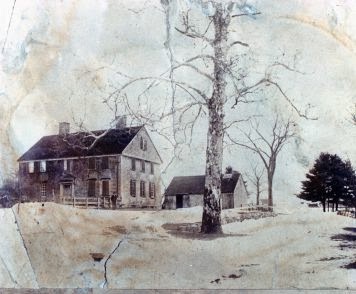
The Clark-Kingsbury Home Medfield MA


And check out New Medfield book by Richard DeSorgher now on sale Richard is Medfield's new Selectmen and local Historian


My Grandmother Mildred Mabel Kingsbury Phelps Berry grew up in this Medfield home known as the Clark-Kingsbury Farm Historic District Her mother Melissa Cross Davenport Phelps died of typhoid when Mildred was 9 months old. At the time the the Phelps family was living in Peterborough NH . Frederick Winsor Phelps, Mildred's father was working for the railroad company that the Phelps family owned. Mildred went to live in Medfield with her aunt Lillian Phelps Kinsbury married to Allen Alanzo Kingsbury. (pic below)
Genealogies of Mayflower families: from the New England Historical and Genealogical Register, Volume 3

Lillian Phelps Kingsbury (1869-1951) daughter of Francis Henry Phelps (1840 - 1877) and Esther Antoinette Hall Phelps (1846 - 1938) Allan Alonzo Kingsbury (1865 - 1952) son of James Allan Kingsbury and Mary A. Morse Kingsbury


Mildred Mabel Kingsbury Phelps born June 8 1909 Peterborough, NH died June 8 1995 Lynn, MA

Mildred attended Medfield Public Schools and  worked at the Medfield Public Library

The photo from This Old Town: The long history of Girl Scouts in Medfield shows Medfield Troop I “Red Rose” in 1920. In the top row are: Florence Johnson, Mary Kennedy, Muriel Holmes, Ruth Hunt, and Grace Wilbur. In the second row are Grace Kelly, Captain Evelyn Byng, Lucy Newell, Laura Mills, Marjorie Doane, Lieutenant Gwendolyn Morse, and Dorothy Allen.
In the third row are Ester Peterson, Frances Tubridy, Marjorie Platt, Dorothy Gardiner, Edith Mills, Marion Kelly, Threta Platt, Doris Cobb, and Mildred Weiker. Seated are Winifred Griffin, Lois Heard, Betty Crooker, Gertrude Leroux, Ruth Sauer, Mildred Phelps, and Carolyn Hamant.
In 1921 Noerfolk County Agriculture & Home Bulletin: Collection Jelly " -1st, Katherine Ehnes, Medfield; 2nd, Mildred Phelps, Medfield; 3rd, Margaret Goode
                                               Kingsbury Homestead 1931


Courtesy Theresa Knapp.

Priscilla Kingsbury with Robert Levi Berry, JR (My Dad) at Kingsbury Pond


My Dad Robert L Berry


My Dad Robert Levi Berry, Jr with his dad Robert Levi Berry, SR in Medfield at the house


              Read More about the Mystery Lady (believed to be Lillian Phelps Kingsbury)
 
     
Grave A A Kingsbury
 
  
  From History of Medfield, MA 


Kinsgbury-Lord House Ipswich MA  


See Kingsbury genealogy: the genealogy of the descendants of Joseph Kingsbury of Dedham, Massachusetts, together with the descendants in several lines of Henry Kingsbury of Ipswich, Massachusetts, and our Canadian cousins


JOSEPH KINGSBURY Needham MA
 
On Saturday, January 5, 1924, a fire almost completely destroyed the original church building. The Kingsbury, Greene, and Crossman memorial windows, along with the Communion silver, the old bell, some flags, the pulpit, and a few other furnishings were the only items to survive. The cause of the fire is unknown.

Joseph Kingsbury was one of the three Kingsbury brothers who sailed to America on the ship known as the Talbot which was part of a fleet of four ships under the command of Gov. John Winthrop. they set sail March 27, 1630 from Southampton, England, and arrived in Salem, Massachusetts, about July of 1630. Gov. Winthrop was not satisfied with Salem and the fleet moved down the coast eventually settling in Shawmut (now Boston). About 1635 they sent an exploring party up the Charles River and they established a settlement at Watertown. John and Joseph Kingsbury were part of this party. The community flourished and they quickly organized in what was referred to as a "Contentment" recording all events. The Kingsbury brothers were apparently of strong pioneer stock and considered Watertown too crowded. A small band of like minded individuals again used the Charles River which turned South just beyond Watertown and settled in what is now Dedham. They petitioned the General Court on 9-5-1636 for a large tract of land to form their community. The petition was granted on 9-10-1636 and the name Dedham was assigned by the court.


(NOTE: Current county boundaries have Dedham and Needham in Norfolk County, but prior to 1800 Norfolk County did not exist and all of this area was included in Suffolk County. Apparently, on 8-18-1636, before the group left Watertown, theymet at the home of John Dwight and drew up a Covenant for their political organization. John Kingsbury signed the Covenant that day, but Joseph did not sign until1637, after he arrived in Dedham. The Dedham town records for 11-1-1637 indicate that Joseph Kingsbury deeded part of his land to the town for the purpose of building a town meeting hall. In 1638 the records show that Joseph Kingsbury deeded one acre of his land abutting on High Street to the town of Dedham for a church site. A second structure for Old First Parish Church was erected on the same site at the corner of Court and high Streets in 1763. In 1819 ownership of the church passed to the Unitarians.The records go on to note that Joseph was in turn given an acre of land to replace that which he had given for the church. However, this land was rocky swamp land and the land he gave the church was prime land. Joseph held against the town fathers for some time and apparently this was the basis for a long feud between Joseph and the Church fathers. In several official writings of the church Joseph Kingsbury is noted as having a bad temperament and was not allowed into the church fellowship. For his part, Joseph appaently did not want to be part of this church body. Later Joseph was again called upon for land and he granted another acre of his land to the town for a burying place. With this in mind, there is some question as to why Joseph was buried in Norfolk. Among the records of Dedham it is noted that the first child born in the Community was Ruth Morse, born 7-3-1637 and Mary Kingsbury, born 9-1-1637 was the second. The Church of Dedham was "gathered' on 9-8-1638, but Joseph was not one of its originators. In fact, he was apparently rejected at the time because he was considered too worldly and "the Lord left him into a such a distempered passionate flying out on one of the Company that we thought him unfit for the church". This could refer back to the problems over the tract of land for the church. Millicent Kingsbury was accepted into the church on 4-24-1639 and Joseph finally admitted on 6-26-1641. In the writings of Arthur F. Kingsbury in 1912, it is interesting to note that the majority of the descendants of Joseph
Kingsbury for a period of over 275 years lived their lives within a 15 mile radius of Dedham. Joseph was apparently a skilled metal worker and mechanic, in addition to his farming endeavors. A young man who trained under him, Robert Crossman, married his daughter Sarah. In 1638 he as not admitted to the Dedham Church because he was "too much addicted to the world", but on the 9th of the 2nd month 1641 the church wa persuaded of repentance and faith and he was received. Perhaps in keeping with his long feud with the church, Joseph was buried in Norfolk Cemetery.

Will dated 22 March 1675, proved 1 June 1676, bequeaths to sons Joseph, John, Eleazer and Nathaniel, wife Millicent; daughter Sarah Crossman; son-in-law Thomas Cooper of Rehoboth; to grandchildren Elizabeth Brewer; sons-in-law Robert Crossman and Nathaniel Brewer. Refers to deceased brother John Kingsbury.

Dedham Births & Burialls recorded in Boston 1635 - 1643
Transcribed by Coralynn Brown
The Register of the Births and Burialls in DEDHAM from the Yeare 1635 unto the Yeare 1643.

KINGSBURY
Mary the daughter of Joseph Kingsbury & Millecent his wife borne 1 (7) 1637.
Elisabeth the daughter of Joseph Kingsbury & Millecent his wife was borne 14 (7) 1638.
Joseph the son of Joseph Kingsbury & Millecent his wife was borne 17 (12) 1640.

From the "Great Migration Newsletter":
Joseph Kingsberry (De): Joseph Kingsbury of whom mention was made before that he was left out of the foundation of the church for some cause there mentioned? was admitted to Dedham church on 9 April 1641 [DeChR 24-25]. On 18 July 1637, the town of Dedham authorized Ezechiell Holliman of our society to turn over his lot, as also that which he purchased of Raffe Shepheard, unto John Kingsbery & Joseph his brother? [DeTR 1:32]. On 1 September 1637, ?Mary, the daughter of Joseph & Millicent Kingsbury? was born at Dedham [De VR 1]

Built in 1755 by John Bird. It was built on 216 acres which is now known as Bird Hill. John lived in the house with his wife Mary Lyon. The land and house have both changed over the years. Some of the low areas have been filled in and high ground has been leveled. Some of the original farmland was used for a glue factory and then the land was subdivided into many different building lots in 1810 when the property was sold to John and Joseph Kingsbury.


Needham Fire Company, Hose 1, 1898. The members of Fire Company, Hose 1 sit for a portrait at the Abell Photo Studio. They are: G. Horace Pierce, Alger E. Eaton, Fred N. Mills, Edgar Pierce, Henry A. Kingsbury (Chief), Alston R. Bowers, Charles C. Barnes and H. Howard Upham.


More Family Photos of Phelps Kingsbury, Berry & Davenport

In Medfield Robert Levi Berry SR & Mildred Phelps


Mildred Phelps University of Michigan1926 Sorority


Melissa Cross Davenport Phelps


Francis Whiting Kingsbury wife of Lewis Hall Kingsbury son of Samuel and Hannah (Hall) Kingsbury of Walpole, Mass., and was born on September 28, 1814, the youngest of nine children; married Eunice A. daughter of John Aldis and Judith (Richards) Haven, of Dedham, who died in June 1882. In November, 1887, he married Frances M. Whitney. He died in Boston on December 9, 1892, as the result of an accident which occurred on the 8th, while he was there on business for the Dedham National Bank.
He received a common school education in his native town, and after following various pursuits while living in Allegheny County, New York, he came to his uncle, Mr. Hall of Framingham, and with him visited his oldest sister, Mrs. J. N. E. Mann, of Dedham, on Christmas Day, 1838. From this time he has been actively identified with Dedham history. In the spring of 1842, he became a clerk in the Registry of Deeds and continued in that capacity until September, 1844, when he was appointed as clerk in the Dedham Bank. In December, 1846, Ebenezer Fisher Jr., cashier of the bank resigned, and Mr. Kingsbury was chosen to fill his place, entering upon his duties on January 1, 1847. Upon the reorganization as a National Bank in January 1865, he was elected President to follow Dr Jeremy Stimson. In 1873 at the request of Mr. John H. B. Thayer, the retiring cashier he assumed the duties of that position, with Ezra W. Taft as president. In January, 1885, he was again elected President and continued in that ofiice until his death. For thirty years Mr. Kingsbury has served the town as Treasurer, and in all the offices which he has held, has shown marked character and ability. He was a member of the Dedham Historical Society from September 5, 1865, to the time of his death. From Dedham Historical Society Register
 

Charles Herbert Kingsbury son of William Prescott Kingsbury and Madeline Florence Brown


Lillian Phelps Kingsbury and Allen Alazona Kingbury Children:


Francis Henry Kingsbury (1889 - 1969)


Carlton Winsor Kingsbury (1893 - 1963)


Amos Clark Kingsbury (1897 - 1955) 


Article on Willis Phelps Railroad

Popular Post